
NASHVILLE, Tenn. — From the explosive intensity of 100 meters to the toil of 10,000 meters, track and field tests the limits of individual excellence. Yet even in that world, the 400-meter hurdle event stands apart.
Take the longest sprint distance. Add 10 obstacles, each two and a half feet high, at regular intervals around the track. The race demands a unique combination of attributes: a sprinter’s speed, a distance runner’s endurance, and resolve and technical skill unlike any other event.
Growing up, Althea Thomas didn’t just accept that challenge. She craved it. She had to bargain with a high school coach to get to run the 300-meter hurdles for the first time (the race is so punishing that it is often shortened at the high school level): She could run the hurdles, the coach said, if she ran the 1,500 meters first. Lucky her. She loved it all the same. She loved it even more during summers, when she ran the full 400 meters with a local track club. Others wilted in that final stretch. She flourished.
“I lived for outworking other people and having that grit,” Thomas says. “I would come across really fast sprinters in high school who could run a really good 200 meters compared to me. Against them, the 300 hurdles would be a photo finish. But the moment I moved to 400 hurdles in the summer, it was no competition. That last 100 was where I lived.”
And she never assumed she got to the finish line on her own. Track is a stage for soloists—think the singular excellence of Wilma Rudolph or Allyson Felix. For Thomas, Vanderbilt’s director of track and field and cross country, the sport is also rooted in community. She learned from her dad that the sport is also about family and belonging. From her earliest jobs, she saw the sport’s potential to expand horizons. And at Vanderbilt, she saw an opportunity to build something special not despite the university’s mission but because it offered a blueprint. For Thomas, track and field is about a few seconds of speed and a lifetime of learning.
“The way my dad raised us was that we needed to do everything we could to maximize our potential and where we could go,” Thomas says. “But you always come back and you always try to bring someone with you. You always try to help the next little girl.”
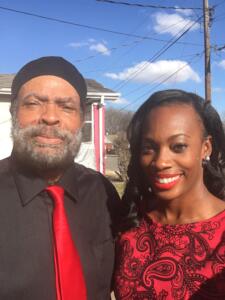 Vanderbilt student-athletes and staff, who know the new boss as “AT,” also know her dad—who still gets his daughter in hot water when he calls in the middle of a supposedly phone-free practice to wish her student-athletes good luck. They know him as “Coach Thomas.”
 Thomas knows all about the daunting standards of SEC track and field. As a student-athlete, she helped LSU add to the aforementioned championships. She did the same as a coach at Georgia. She chose Vanderbilt because she believes a school that exists to bring together the best and brightest in all fields can do more than produce talented soloists on the track.