
June 11, 2015
By Jerome Boettcher | Subscribe to Commodore Nation
Philip Pfeifer didn’t pick up a baseball for a year. Matthias Schwab nearly went that long without swinging a club. Watching tennis put Astra Sharma into tears.
The 2013–14 school year was physically and emotionally painful for three Commodores as they had to sit out while their teammates played on. But all three displayed tremendous self-drive and were aided by multiple coaches and support systems around them to bounce back even stronger.
As the women’s tennis, men’s golf and baseball teams make deep runs into the NCAA postseason, all three players have returned and played essential roles in their teams’ success.
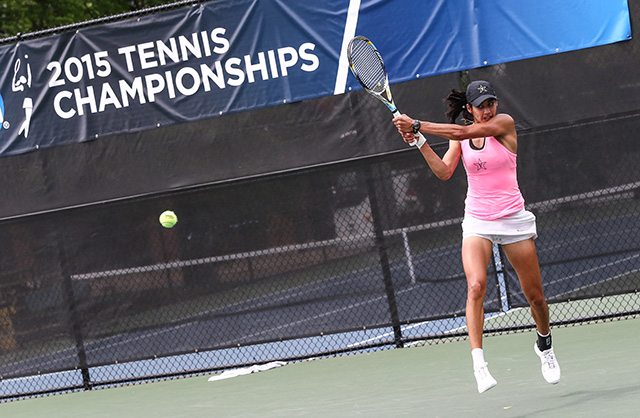
Watching from sidelines motivated Sharma
Raw and undercooked.
That’s how Astra Sharma felt watching from the sidelines, a year away from the sport she had been playing since she began running around in her nappies (Australian for diapers) with a racquet. She felt rust building up–along with concern.
She was supposed to be out there on the hard courts, racquet in hand, helping her teammates battle the toughest teams in the Southeastern Conference and make deep runs in the NCAA Tournament.
Instead, her first year on a college campus featured just one doubles match and a couple singles matches. After one set, it became visibly apparent she was still far off from complete recovery when the swelling “looked like I shoved a tennis ball in my wrist.”
She took a redshirt year and watched as her teammates celebrated a trip to the Sweet 16. She wondered if she would be able to experience that feeling, worried she might not be able to crack the lineup for the Commodores.
“I knew how hard everyone was training here,” she said. “I’m so raw and undercooked. Even if I did come back, they are good players. How could I ever get my match sharpness back? How could I hope to be in the lineup? They’ve been doing this for so long. All this doubt was always there.”
Geoff Macdonald was less concerned.
Vanderbilt’s longtime women’s tennis coach has seen his share of injuries–along with a variety of ways players have responded. What pained Sharma so much, Macdonald actually believes aided her: she grew by watching.
She watched her teammates, charted their matches, set up cameras, analyzed video of their play. Macdonald would ask why her teammates won or lost matches, what did she pick up from that doubles match? He’d give her articles or books to read and then have a “real conversation” about the material.
Though Sharma hardly played her freshman year, Macdonald was confident enough in what he had seen from recruiting the Australia native that her physical game didn’t worry him. He grew extremely encouraged as he got to work with Sharma during her year off. Her respect for the mental game and her grasp of techniques and tactics impressed him. He said it was rare for someone that young to be that in tune mentally.
“I had faith that things would work out,” Macdonald said. “I think she learned a lot last year by watching. You can be hurt, mope around, feel sorry for yourself and shot down or you can say what is the single best thing I can do here? And that’s learn. Watch what goes on in a match from an observer’s point of view, which is hard to do when you’re playing. I think it helped her see tennis in a new light.
“It was extraordinary. It made me think, `OK, as soon as she’s healthy she is going to be fine.'”
Self-confidence has replaced doubt for Sharma, who has risen all the way to No. 2 singles on the team and thrived during her redshirt freshman season.
Last month, she played no small part in the Commodores winning their first Southeastern Conference Tournament championship in program history.
Sharma went undefeated in singles and doubles play in the tournament, earning SEC Tournament MVP honors along with First Team All-SEC accolades. She locked up Vanderbilt’s spot in the title game against Georgia after delivering the game-winning point in the semifinals against Florida’s Josie Kuhlman, ranked 10th in the country.
“When we won SECs, I could not stop smiling all of Monday,” Sharma said. “I literally walked to class with a grin on my face, eating lunch with a grin on my face. My cheeks are hurting because I’ve been smiling so much. I had to use my hands to massage down my face.”
Stark contrast from a year ago when tears rolled downs her cheeks.
Overuse was the culprit for Sharma’s injured wrist. Two years ago, just months before she arrived at Vanderbilt, she spent a couple hours a day back home training in Perth, Australia, hitting back and forth against a wall. The constant repetition caused a torn ligament in her wrist. Once the ligament healed, tendonitis crept in and when one muscle healed another ached. The injury wasn’t severe enough to warrant surgery so Sharma played the waiting game, which lasted nearly a year, much longer than she imagined.
“I’m pretty dependent on playing tennis,” she said. “It is such a big part of my life, to be sidetracked for a whole year and not knowing how long it was going to take… No one actually gave us a timeline. It is going to be three months. Wait and see, wait and see, wait and see until the pain stops. It was so frustrating.”
Throwing in the towel, calling it quits and heading back home was tempting for Sharma.
She often found herself sobbing during phone conversations to her parents thousands of miles away back home in Perth, Australia. One day, volunteer assistant coach David Thornton asked her about her wrist and, much to her surprise, she spent the next three hours crying.
“No one, not even myself, knew how painful it was until David actually said that,” she said. “I had been balling it up the entire year.”
She started meeting with Thornton every week just to talk. Macdonald and associate head coach Aleke Tsoubanos kept her involved with the team, made sure the mental aspect stayed sharp. Her parents offered words of encouragement from afar, sent prayers her way. Her teammates stayed supportive, but Sharma admits it was bittersweet watching them.
Then Macdonald sent Sharma and teammate Frances Altick over to France for some summer tennis. Sharma competed in several tournaments, open to just about anyone, regardless of skill level. World-class talent one day, someone you’d see at a city park the next.
The results varied for Sharma. She started off slow, losing to one stalky lady who, “hit the slice and made me look ridiculous.” But by the end, she was improving even if the results weren’t completely there.
“It is definitely good to get all the bad stuff out of the way and come into this season a bit more seasoned,” she said.
In the fall, Macdonald saw steady improvement as Sharma worked her way into the lineup. She impressed her head coach with a defiant work ethic and she showed promise at No. 5 singles.
Then came the Miami Invitational, which both agreed was a turning point. Sharma lost in straight sets to a player from Miami in a match both coach and pupil thought was a poor outing. Macdonald saw some signs that Sharma was reverting back to her old ways, symptoms she showed earlier in the year and in the summer. Not 10 minutes after the match ended, Sharma approached Macdonald and said she knew what she did wrong and planned to make adjustments.
“From then on she really hasn’t looked back,” he said. “She got a lot of confidence at national team indoors. She had a lot of confidence going out to California. She beat good players at USC and Stanford. She is a joy to watch. She is certainly a joy to catch. She has been a real key to our success this year.”
Then she made her SEC debut against Mississippi State at the No. 1 singles spot, filling in for injured teammate Sydney Campbell. She won in straight sets and helped the Commodores win their league opener 4-3.
She gained even more confidence by beating Florida’s Kuhlman in the regular season (she would defeat her again in the SEC Tournament). She clinched the victory for the Commodores, handing No. 8 Florida its first SEC loss.
Four weeks after the historic SEC Tournament win, the Commodores were again celebrating –this time after winning the program’s first national championship. And Sharma wasn’t an observer, she was in the middle of it all as NCAA Tournament MVP. She clinched the winning points of the team’s last three matches, including a 4-2 win over defending champ UCLA to claim the crown.
“It was just that feeling of being on a team, it spurred me to do well,” she said. “I just trained really, really hard. Whenever there was an opportunity to come out for individuals, I would be on it… as well as for myself but also to pay back Coach for how much he has done for me–his patience and belief in me. I wanted to do this. I wasn’t thinking I want to play No. 1 or I want to play No. 2 but I was almost like, `I want to get better. I want to show myself I can do this and I deserve to be here.'”
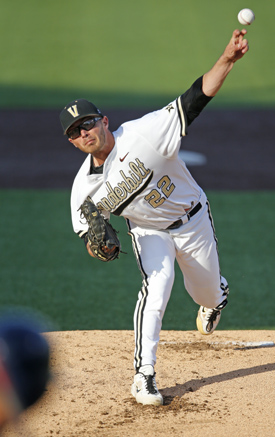
Pfeifer climbs back on the mound
The visits were never long.
Philip Pfeifer would pop in, plop in the chair, catch up and within minutes he’d say goodbye and be on his way.
Vanderbilt baseball coach Tim Corbin loved the impromptu conversations. He appreciated that Pfeifer, even though he had been dismissed from the team for the 2014 season due to violating team rules, still swung by to check in.
One particular visit really stuck out to Corbin, though. It was after the Commodores had returned from Omaha with a national championship. Before Pfeifer left Corbin’s office, he turned to his coach and gave him an update.
“He said, `I just want you to know I’m in a really good place right now, doing well academically and I’m going to finish (school),'” Corbin recalled. “`I’d love to play baseball again, but I’m not going to ask you to play baseball again. I know that if you feel that it is right, you’ll approach me.’ And I said, `Yes, sir. I will.’ I left it at that. Thank goodness it all worked out for he and our team.”
Pfeifer graduated with a degree in philosophy this semester. The quirky, left-handed pitcher also stepped back onto the mound in a Commodores’ uniform for the first time since the NCAA Regional in 2013. By the end of April, the team leader in saves was thrust into the starting rotation. He picked up the win on Monday as Vanderbilt clinched a return appearance to the College World Series – but Pfeifer’s first trip with the team after missing last year.
If baseball hadn’t been stripped from him, he’s not sure if he would have reached this point.
“Spending time away from the game was probably the biggest thing for me,” Pfeifer said. “Corbs told me last year to just use my time to straighten myself out and get school right and become comfortable in my own skin. Not having my vice (baseball) or at least the thing that made me think it was all OK–not having that was the wakeup call, the motivation, I suppose.”
Early in the fall of 2013, Corbin dismissed Pfeifer from the team. Though heartbroken, Pfeifer accepted his coach’s decision.
“I put myself in various positions where it was incredibly unhealthy for me,” he said of why he was dismissed. “It was about strike three. Corbs decided to work with me. I was fortunate enough to have a coach who cared.”
The recovery process wasn’t easy.
Pfeifer didn’t touch a baseball for 12 months. He still went to games to root on his teammates. He even drove up to Omaha for a game during the College World Series. But being back in Nashville, watching his teammates celebrate winning a national championship without him was obviously bittersweet.
“Talk about winning a national championship and not being part of that year–that was tough,” he said. “Guys from my draft class that ended up leaving and I wasn’t able to spend their last season with them. That was probably my biggest disappointment was not being able to be there with them.”
In the meantime, Pfeifer was determined to get his life back on track.
While he focused on his classes–he was named to the 2014 SEC Spring Academic Honor Roll–he also felt overwhelming support from those around him. His parents, Phil and Janet, drove down I-40 from Farragut, Tenn., every other weekend to visit.
“Having two parents that supported me like they did was huge,” he said. “I don’t think I would be here without them.”
Pfeifer also met with the athletic department’s sports psychologist, Vickie Woosley, once a week. He first met Woosley his freshman year when he started to fall into trouble. But back then, just a 19-year-old kid, he wasn’t that receptive to what she had to say.
He began to listen last year, and found that she was all ears, too.
“Just having somebody older to talk to–those people have experience,” he said. “If you can learn from other people’s experiences then you can save yourself a lot of trouble. She kind of helped guide me and helped me deal with my frustrations with not being able to play. I was frustrated. I won’t lie. I was pretty frustrated. I really missed it. But she helped me stay patient.”
Then there was Corbin.
Pfeifer might not have been on the team, but by no means did that mean he was out of the family. Corbin and his wife, Maggie, met with Pfeifer several times throughout the year for dinner.
They wanted to know he was doing OK. This was way bigger than baseball.
“You don’t want to cut a kid off of an opportunity or kill his spirit because of a mistake,” Corbin said. “I think it is what they do after the mistake that counts. They can make a couple mistakes as long as they’re not life-threatening. You can try to work through it and live through it. That’s what we did. Phil’s mistakes were more detrimental to himself more than anything else.
“I just want to see him through those and help him first in his life as much as I could from my mentorship or my position. My position is that of a teacher and a coach. My goal was just to help him out personally. Whether baseball or academics at that point at Vanderbilt were going to happen again I didn’t know that. But I at least wanted to make sure we helped him move along.”
Today, Corbin sees a different Philip Pfeifer. He sees a bright-eyed, intelligent, mature 22-year-old who has his life in order and is comfortable in his own skin.
He also sees an experienced pitcher who is capitalizing on his second chance.
“I have a better heartbeat on the field,” Pfeifer admits. “I’m a little bit more in the moment. And I’m not taking it for granted, man. This whole year has been a year of free baseball for me so I’m trying to take advantage of it. (But) it’s not all about baseball. Yeah, my play on the field has probably received some benefit. But I’m a better son today. I’m a better student. I’m a better teammate. I take pride in being able to show up every day, being the same person I was the day before.”
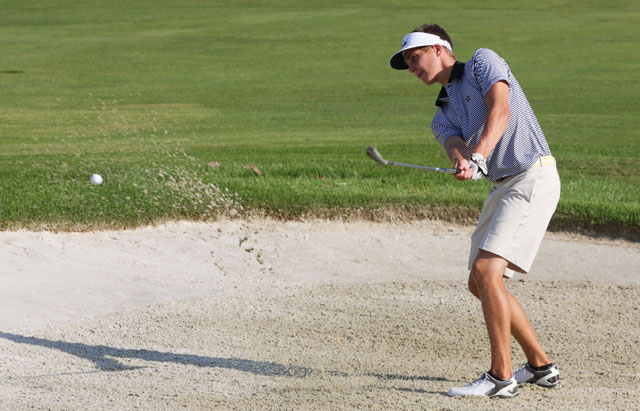
Summer free sparks Schwab
For the first time in memory, the golf course was off limits for Matthias Schwab.
So with unprecedented free time, Schwab took advantage of the summer months before his sophomore year at Vanderbilt.
He went hiking with his brother, and there were plenty of trails to trot, with the Austrian Alps mountain range surrounding the Schwabs’ home in Rohrmoos, Austria. He hung out with friends he normally doesn’t see in the summer as he often is playing golf throughout Europe. Instead, he took in the sights and went on vacation in Italy.
“It was a different summer for me,” Schwab said. “It was nice to be able to step away and spend the summer doing basically what I wanted to do. (But) I would have rather played golf.”
Two stress fractures in his lumbar vertebrae in his back kept him away from the links for 11 months. His freshman season was cut short, his sophomore campaign started late and the summer off in between just served as motivation.
“I wouldn’t say there was doubt,” Schwab said. “At some points, I was thinking to myself, `What if I’m not able to fully recover?’ But I always knew and I always had the confidence that if somehow I’m getting back to play that I’ll come back better than I was before.”
Schwab has lived up to his promise.
He returned to the course in February, and has gradually improved each time out. In four of his last five tournaments, he finished in the top five. He tied for medalist honors with teammate Hunter Stewart at the Mason Rudolph Championship, helping the Commodores win their home invitational for the second straight year.
A month later, he led the charge at an NCAA Regional by tying for second as the team placed fourth–earning a spot in the NCAA Championships for the second straight year. He then finished tied for 11th with teammate Zack Jaworski at the NCAA Championships to help the Commodores finish second in stroke play and advance to match play for the first time in program history. Two weeks before being named to the All-SEC First Team (he earned All-SEC Freshman honors in 2014), he was selected to play for the European team in the Palmer Cup in June. Similar to the Ryder Cup, the Palmer Cup pits the top 10 American collegiate golfers (which includes Stewart) against the top 10 European collegiate golfers.
“It definitely feels good,” Schwab said of his comeback. “In the fall, when I was out I was a little separated from the team. I wasn’t really able to play or even practice with them. It is really cool to be back, spend more time with my teammates on the course and in practice. It is really nice to be part of it.”
Three years ago, Schwab wasn’t sure how he fit into the Commodores’ plans.
He had committed to golf at Vanderbilt but that was while he was being recruited by previous coach Tom Shaw.
Schwab was ranked sixth in the World Amateur Golf rankings and the second-highest European. But he was concerned he’d have to win over a new coach. Instead, coach Scott Limbaugh won him over.
He flew across the ocean, watched Schwab play in the Austrian Open and then spent three days at the Schwabs’ home in Austria. He got to know Matthias, his parents, his brother, his swing coach, his therapist, his trainer. They hiked up the mountain together.
“That was a really nice experience for me and really nice to see that this guy really cares about me coming a part of the Vandy golf team,” Schwab said. “That meant a lot to me for sure. When he came over, I was really encouraged after meeting him. He is a really nice guy, really energetic. I liked him from the starting point.”
That relationship only grew stronger last year when Schwab’s season was cut short.
Last summer, when Schwab stayed at home in Austria, Limbaugh constantly texted, emailed and even video chatted over Skype to check in and see how Schwab was feeling.
“He has been a big part of the whole recovery and my whole comeback,” he said. “He is my biggest supporter here in the states I would say. Thanks to him, I’m still here.”
After the Querrencia Cabo Intercollegiate in Los Cabos, Mexico on March 4, 2014, Schwab felt extreme discomfort in his back. His freshman season abruptly came to an end, with stress fractures in his L-4 and L-5 vertebras. He had suffered a back injury in 2009 that put him out for four months, and now the aches and pain had crept back in.
As he grew older and delved into more competitive golf circuits in Europe, the amount of rounds he played mounted. Schwab believes overuse and poor core and back strength led to injury. The rest of his freshman semester, he rested up, choosing to avoid surgery. In the summer months, he underwent therapy and used daily exercises to help his core muscles. But the progress was slow and tedious.
“It got boring,” he said. “At points, it was frustrating, too, because sometimes I just wasn’t making progress.”
When Schwab returned to Nashville for his sophomore year, Limbaugh was waiting for him with a plan. Limbaugh had talked to Ben Crane, a veteran golfer on the PGA Tour who has experienced back issues throughout his career. Crane recommended Schwab see his physical therapist Tom Boers, who has worked with the likes of Phil Mickelson, Davis Love III, Fred Couples and Greg Norman.
Limbaugh and Schwab hopped in the car and drove two and half hours south to Boers’s office in Dalton, Ga. This was the first of six trips to visit Boers with Limbaugh or assistant coach Dusty Smith. One time, Boers just spent an afternoon on the golf course observing Schwab and watching his swing. Boers suggested exercises for Schwab to strengthen his back. He offered tips to better his posture. He noticed bad habits Schwab fell into. He recommended Schwab use a push cart instead of carrying his clubs over his shoulder.
“The way I was standing and the way I was addressing the ball wasn’t very protective for my back,” Schwab said. “He helped me with the whole deal. Not only exercises for my swing–even normal, everyday movements you make, he helped me to protect my back better. He played a big role in getting me back on the course.”
Schwab took it easy in the fall. When the team worked out in the weight room at 6 a.m. on Mondays and Wednesdays, he rode the stationary bike. He did minimal chipping and putting work.
He was cleared to play in his first tournament–the Gator Invitational in February. The first day would provide a good test for his back–36 holes. He trudged through 54 holes in two days and tied for 29th for the second-highest finish on the team. His first tournament back proved to be a huge step in the right direction.
“I think the point that was really encouraging was when I was able to hit full swings without having to think about my back,” he said. “I feel like the first tournament was the turning point. It showed me I’m basically back without any issues.”
Schwab has showed his competition he is back, too. Heading into the NCAA Championships, he ranked second on the team with top 10 finishes and stroke average.
And that’s just in three months of work. Schwab’s eager about the future, especially since he is back in the full swing of things.
“I still think I have a lot of potential,” he said. “There are still some times on the course where I don’t feel super comfortable, probably because I’m still a little rusty. I’m definitely getting back and I’m feeling really good about my game.”