
April 1, 2010
View Archived Issues/Subscribe
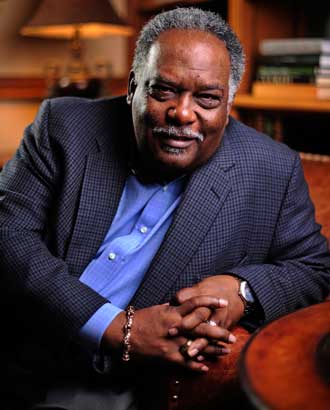 Regarded as one of the most influential leaders on Vanderbilt’s campus, Vice Chancellor David Williams has overseen Vanderbilt’s athletics efforts since 2003. Since taking over the role, Vanderbilt has experienced unparalleled success on and off the field. Commodore Nation recently sat down with Williams to discuss a wide range of topics regarding the state of Vanderbilt athletics.
Commodore Nation: It’s been 6 1/2 years since the restructuring of Vanderbilt’s athletic department, how satisfied are you with the results?
David Williams: We’ve moved forward and had a real good run at it. Like any organization, I think we’ve hit that point where to a large degree, you’ve got to step back and reevaluate and, one, maintain where you are, but at the same time look at how you move forward.
You have to guard against just saying things look really good or you get complacent, and that is when you start to lose ground.
CN: Where is the athletic department financially, given the difficult economic times?
DW: We actually came through the recession really well. We’ve been under budget every year, and starting this year the inherent deficit we had has been removed. As long as people understand that there is a subsidy or investment that the university gives to athletics, I think we’ve done real well.
We probably watch pennies a lot more than other places. There are things that we do that other schools don’t do. For example, it is very rare that a coach will reward a scholarship to an existing player in December. If we have a kid that graduates in December, we don’t give another kid a scholarship in the spring. We don’t do that because that is money that we can then pay to use for the cost of summer school.
CN: How much has the economy affected Vanderbilt’s facility plan?
DW: All of what is needed for the facility plan has to be raised money. While we’ve been able to continue to get pledges, when we set that plan we were expecting that we would get money faster, but the recession has slowed us down. Pledges are still coming in, and we’ve been able to do something every year.
Part of the reason the facility plan slowed down wasn’t only the fundraising aspect, but also because of the problems that went on in higher ed. We as a university have decided that we won’t take on any debt. In the past, maybe you’d get a pledge that we’d borrow money to pay over the next three years or so. Now, we are at a point where we can’t do that. We’ve got to have the money in hand.
CN: Is the goal for Vanderbilt to get to the point where it does not need a subsidy from the university?
DW: That is not the goal. I don’t think in modern times that we will get to the point where the university doesn’t provide that investment. We needed to get to the point where the university understood that to run a Division I program in the SECâ€â€Âbased on the facilities we have and what we are planningâ€â€Âthis is a program that needs to receive an investment every year. Other parts of the university receive an investment, and the university needs to see it just as that.
Our return on investment won’t be monetary, it will be returned in other ways. There are alumni that tell me that the only times that they hear about Vanderbilt is in the sports page. Another thing that helps is that we do a very good job of graduating our student-athletes, and we are also sending our share of players to the pros. Any time you can get your name out there in a positive way, that is a return on investment.
CN: What facility work is planned to take place in the coming year?
DW: There will be some work this year in the McGugin Center to expand the academic center. You will also see some expansion as it relates to football. We will expand some position rooms and coaches offices. Over the next couple of years, the football locker room and training rooms will be enhanced. In doing that, it will also create an opportunity to build some dedicated team rooms not only for football but for all the Olympic sports in the McGugin Center.
This will begin this year, but it will be a two-year process to get it completed. We’ve already gone to the board and gotten the first part approved. We had to manipulate temporary locations, so we are going to have to move the football staff to the stadium after spring practice. As soon as the semester is over, we will move academic support out so we don’t inconvenience that operation.
CN: What is the status of the Athletic Hall of Fame addition?
DW: I would say that unless someone comes up with a large donation, you probably won’t see the Hall of Fame taking shape for about three years. In that third year we will get to that, but that can change if the economy really blossoms or somebody wants to come in and make it happen sooner. We had hoped that it would be a part of what we would do now, but in reality it is going to have to move back.
CN: The Big Ten has been vocal about looking for a 12th team, if Vanderbilt was approached would you listen?
DW: No. I wouldn’t listen because we are a charter member of the SEC. I spent 14 years in the Big Ten at Ohio State and know the Big Ten well. From an athletic point of view, the SEC is it.
When Chancellor (Gordon) Gee was here, he very well might have received that phone call. There were times when at least one president in the Big Ten was very interested in talking to us about it. I remember telling him: “If you so much as entertain the notion of moving to the Big Ten, you would have to leave. It would be one thing to move this school from the SEC to the ACC, but if you move this school to a northern conference, the fans and alumni wouldn’t stand for it.”
I don’t think we will ever look to go to another conference. I think the Big Ten has the money that can rival what we get in the SEC, but I don’t ever see us being the 12th school.
CN: How much does the new contract with ESPN benefit Vanderbilt?
DW: It allows us to do some things that we probably couldn’t do, and it allows us to do other things a little better. The university so far has been consistent in the fact that just because we are getting $4 million more from the SEC, they have not said they will reduce their investment in us. As long as that stays the same, it gives us that cushion.
I’ve always said to be competitive, we need to understand that at a minimum we need a $45 million budget. If the university is willing to contribute 1/3 of that $45 million, our growth really has to come from our share of SEC revenue and what we are able to earn ourselves. Will we still have the smallest budget in the SEC? Yes, it will be a race between us, Mississippi and Mississippi State.
It will help us with salaries for staff and for coaches. Our staff is probably pound-for-pound the least paid in the SEC. Every comparable position at another school probably makes more. I would say that while our coaches are paid well, I don’t think we have any coach that is at the top of the level, although some of them are at that point in their coaching.
CN: What should Vanderbilt fans reasonably expect from the football program?
DW: Trips to bowls. What we have to reasonably say is that success has a lot of different levels and non-success is when we are not going to a bowl game. We can be different degrees of successful, but if we aren’t going to a bowl game, I think we have to say that we were unsuccessful.
CN: How disappointing was last season for you?
DW: It was disappointing for all of us. I think that the expectation was greater after we had gotten to that level. The people on the team and in athletics, and the whole university experienced something they had not experienced in 2008. That thrill was not all that it could have been in some aspects because it was a bowl game played locally. I went to about 12 bowl games at Ohio State, so I know what it is like to go to a bowl game in New Orleans, go to the Rose Bowl; as exciting as it was to make that bowl, traveling to a bowl is a whole different thing. I was sort of primed for that.
Besides not going to a bowl, I didn’t think we were a 2-10 team. Even if you are not going to a bowl, 2-10 certainly is not what we thought. I really think the low point was when we lost at Army, although I give Army all the credit In the world.
Bobby has done a great job to get us to 7-6, but maybe we collectively thought the job was done and it wasn’t. To a large degree, after going to a bowl game, we kind of breathed a sigh that we’ve done it, but the truth of the matter is that when you think about it, we were 7-6.
CN: Did you feel like something within the program needed to be changed after the season?
DW: I got a lot of e-mails and calls. Bobby recognizes what needs to be done, and my view of it is that I would not want someone to come in here and tell me, “You need to change your secretary.” I’m not a person who is going to go into a head coach and say, “You need to change assistant coaches.” If I’m not happy and we are not happy with the direction, and we don’t have the confidence, I have to deal with the head coach. I believe in Bobby Johnson. He’s our football coach. I try to remind people that we hadn’t been to a bowl in 26 years and remember who was the head coach who got us there.
CN: There was disappointment among some Vanderbilt fans about the attendance at the men’s basketball Western Kentucky game at Bridgestone Arena, why was the attendance low?
DW: People need to realize that one of the hardest things to do is play a road game in your own town. It was Western Kentucky’s home game, so we couldn’t put it on our season ticket package. We didn’t have any control over tickets. We had a real debate about that, and we’ve learned something from it. From the ticket point of view, we would never do that again unless we get a bigger ticket allotment.
There is something about our campus environment that people like and are comfortable with. They know where their seat is. They know where the closest restroom is and what concession to go to, where to park and who sits next to them. It is that comfort level that I’m at home. People sometimes don’t understand that just because we go down the street to Bridgestone, we are not at home any more. We saw this last year when we played South Florida.
The game was also in December when people are still into football, especially in the SEC. Another point is that it was a Friday, and Friday night is still either a big football or in this case a big high school basketball night. I was late getting to the game because I was at Ensworth watching my son play.
CN: Have you explored the idea of adding another sport at Vanderbilt?
DW: I really hope that we will be able to show the financial growth and get the go ahead to add a sport. I think from a measurement of success, one of the things you always look at in our business is the Director’s Cup. We need to be a program that is consistently in the top 50 and really should be in the top 25. One of the problems we have is that the Director’s Cup measures success in 20 different sports. We are giving away four slots by only having 16 sports.
I would hope that over the next decade, we’d be able to add four sports. I’d like to see us add softball and women’s volleyball. I don’t know if we can add both of those, but it would be great. I think we can be very successful with softball, and the SEC has a good reputation in softball. The problem it presents is that we need a softball stadium, whereas women’s volleyball is not as difficult to do because all you need is a gym. People will call after they read this and ask about men’s lacrosse. People need to understand that we have a hard challenge. We have a few key factors to look at: we need to always be conscious of Title IX. We also need to be conscious of the conference we are in. We also need to be conscious of the type of students that we have here and that we want to win.
I think fencing would be a perfect sport for us. It has high profile, and it is an Olympic sport. There are enough people to play. It is a sport that has done very well in schools with high academics. It is low cost, and I think we can win at it.
I also believe men’s track would help our football program. It would be low cost to add it with no facility need. Then, I think you think about men’s lacrosse, men’s soccer and women’s rowing.
CN: There is a limited number of tickets Vanderbilt fans can get to the SEC Tournament. Why is the allotment smaller than in past years?
DW: It has something to do with being in a smaller venue, but another problem we face is that we don’t pick an allotment for each year. The SEC makes schools pick an allotment for a number of years, so whatever you take, you are going to take for the next four years.
You try to get to that happy medium where you try to figure out what you can sell the next year when you are in Atlanta and the following year when we are in New Orleans.
CN: You have a daughter who is a student-athlete at Brown, have you been able to learn a lot from her that has helped you in your job?
DW: I think the thing that I’ve learned the most after talking to her and my son, who is a good high school athlete, is that I daresay we don’t do a good enough job understanding all of the different elements of our student-athletes’ lives. We need to recognize that there is a gap that exists just because of who we are and who they are. We can do more to understand.
What we are trying to do is develop a more personal relationship and also a much more information-based relationship. I think we have to do a better job of knowing these kids and trying to help them reach their different goals. We need to understand the aspect of the two dreams: dream the athletic one, but help us help you dream the other one, and let us help you get there.
CN: What can Vanderbilt fans expect in this new decade?
DW: The general philosophy would be that we need to be the best that we can be, and that is to be winners and champions in all that we do. We need to continue to graduate our kids. People say that you graduate most of your student-athletes; yeah, but we don’t graduate them all with the grade point to get into grad school. We balanced the budget, but we need to find new sources of revenue. We do pretty good, but pretty good is not good enough.
I read the book Good to Great by Jim Collins. One of its points that I’ve always taken to heart says, “The greatest hurdle to greatness is being good because when you are good, you get complacent.” I would say our goal is to be great. We may measure greatness a little different then some other places, but that is our goal. That means servicing our university, our fans and our student-athletes in a way where we can be the best that we can be, but never, ever lose the level of integrity and reputation that we inherited. We are entrusted with running a prideful program the way this university has always done it.