
Feb. 18, 2009
 |
|
 Q & A with Roy Neel (pdf) | Commodore History Corner Archive
>>> Read More Features, Columns and Blogs on VUcommodores.com
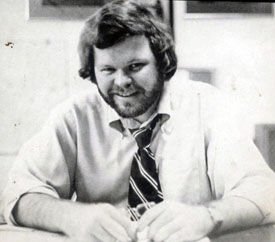
Roy Neel grew up in Smyrna, TN and went to Murfreesboro Central High School. In his first year at Vanderbilt, Neel became the freshman basketball manager and assistant manager to the varsity under Coach Roy Skinner. Before he could earn his degree, Neel was drafted during his junior year and served in the U.S. Navy from 1966-70, including a one-year term in Vietnam as a photojournalist. Neel did receive a degree in English and Art History from Vanderbilt in 1972. He also holds a degree from Harvard (MPA, 1983).
Neel also worked for the Nashville Banner as a sports writer, owned and operated a media-consulting firm, an aerial photography business, and worked for the Mayor of Nashville, where he won several national awards for local environmental planning programs.
From 1977 to 1994, Neel served in key roles in Al Gore’s Washington operations, becoming Chief of Staff for Senator and Vice-President Gore. Prior to leaving the White House, he served as President Clinton’s Deputy Chief of Staff, responsible for coordinating all policy and communications activities for the President.
For nearly three decades Neel has been a prominent figure in national and policy affairs. Most recently he served as campaign manager for Gov. Howard Dean’s presidential bid. Neel is currently Chairman of the Washington, D.C. based Jackson Group, a consulting company specializing in strategic planning for public policy initiatives, and serves as a director of Blue State Digital, a new Internet communications firm. Neel is also an Adjunct Professor of Political Sciences at Vanderbilt where he teaches courses in Presidential Transitions and Presidential Leadership.
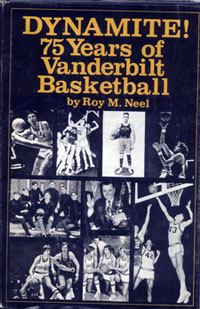
Neel wrote the book “Dynamite! 75 Years of Vanderbilt Basketball History that was published in 1975. That book should be considered the best source for Vanderbilt basketball history until that time.
Recently Commodore History Corner’s Bill Traughber interviewed Roy Neel about his time as Vanderbilt’s basketball assistant manager. Their conversation:
Bill Traughber: You arrived on the Vanderbilt campus as a freshman in 1963. How did you become part of the Vanderbilt basketball team as an assistant manager?
Roy Neel: Back then it wasn’t such a big deal. In our senior year in high school we played Oak Ridge in the state championship at Vanderbilt. Oak Ridge won in double overtime and the star of that Oak Ridge team was Kenny Campbell. When I got to Vanderbilt that fall, I found myself living a few doors down from Kenny who came to Vanderbilt. I went to practice one day and was just shooting some baskets when the assistant freshman coach John Russell, who had been an All-SEC player at Vanderbilt many years earlier, came up to me. They needed a freshman manager and he asked if I wanted to do it. I had no idea what I was getting into, but I said sure. I had never done anything like that before. We only had one manager on the freshmen team and I was also the assistant manager for the varsity team. That was all. The varsity just had a manager and an assistant manager. Now it seems like they have five managers down there.
BT: In your second year as the varsity’s assistant manager in 1964-65 you were able to witness one of Vanderbilt’s greatest seasons. The Commodores were 24-4 and SEC champions at 15-1. What about that historic season?
Neel: It was very exciting with an amazing team in an amazing year. We should have actually gone to the Final Four, but we lost to Michigan by a couple of points (87-85) at the very end of the game in the regional in Lexington. It is as far as any Vanderbilt team has gone into the NCAA Tournament. We knew it was a special team with remarkable players. During the regular season, before SEC play began, they went to North Carolina, but lost (84-78). Had we won we were in position to be about No. 2 in the country. It was a very tight group. They did stuff together socially and were very good friends. About four of them were in the same fraternity. It was a remarkable group academically. Most of them went on to get graduate degrees and did quite well professionally. They all graduated on time. Clyde Lee was at center, Keith Thomas and John Ed Miller were the guards and they were both terrific shooting guards. The forwards were Wayne Taylor and Ron Green. And the sixth man was Wayne Calvert who was probably the best sixth man in the conference. Those six logged almost all of the playing time.
BT: How did the team handle the pressure of the Michigan game?
Neel: That was an incredibly exciting game. It was for sure the biggest game in Vanderbilt’s basketball history. Cazzie Russell was their all-American and Michigan was an intimidating team. There was a huge crowd. It is hard to exaggerate or overstate the excitement for the players, coaches and the rest of us. You knew you were playing an important national college basketball game. And the winner went to the Final Four. There was a huge letdown when we lost. With about a minute to go, we were behind by one point. And they called John Ed Miller for walking in the lane. And it was a late call. He put the ball up and made the shot to put us up by one point with a minute to play. Then the official made the call when it seemed like when Michigan was ready to take the ball out of bounds. It was a judgment call. It didn’t seem like he walked to us. John Ed Miller had a funny kind of step with the ball and maybe it confused the official.
BT: The next season (1965-66) Vanderbilt was 22-4 with a second place finish in the SEC at 13-3. Clyde Lee was a senior and today dominates all the rebounding records at Vanderbilt and graduated from the university as the all-time leading scorer. How special was Clyde Lee?
Neel: I think he is still the most important player in Vanderbilt’s basketball history. It is impossible to compare him athletically to other players who have come since. He was certainly the best Vanderbilt basketball player up to that point. In the 1960’s at six-foot-eight he was considered a big man. He wasn’t a high-jumping six-foot-eight player. You really couldn’t compare him to the big centers you see today in college basketball. Certainly not to a Shaquille O’Neil or any of these guys that dominate. At that point he was clearly the best player in the Southeastern Conference. He was the first nationally prominent basketball player Vanderbilt ever had. You cannot exaggerate his importance to that team. The chemistry between Clyde and the other players was great. They were all unselfish. Clyde probably could have averaged 30 points a game without great difficulty. Had he been a more selfish player or if Skinner had chosen to make him the marquee player, Clyde would have scored a lot more points. He was that much better than all the other big men in the conference. Skinner did not coach that way and Clyde didn’t play that way. And Clyde was an intimidating defensive player also. He was a shot blocker. He was also the ultimate quiet mild-manner player and was never a hot dog. You would never see Clyde showing off. He had more respect from the other players. Other team players knew that he could do just about anything without showboating.
BT: Was it still important to play well against Tennessee as it is today?
Neel: You never forgot the UT games. You wanted to beat them so badly, at least most of the players did. Some would key more on Kentucky perhaps like Thomas who was from Kentucky. They had that orange thing going and coach Ray Mears was inflammatory. They would come to Vanderbilt and walk up and down the sidelines just to incite the crowd while the freshmen were still playing. Then, of course, they would be shocked when a fan would do something unruly like throw an orange. Mears just seemed to ask for that contempt. His players weren’t necessarily bad guys; they were good guys. Mears way of coaching was so infuriating at that time. He was slow-down coach. This is back before the shot clock and Mears would sometimes just sit on the ball. His idea was to get a four-point lead and sit on the ball for the rest of the game. They could psyche out other teams. Tennessee won more games against Vanderbilt than they should have just by breaking a rhythm or taking a team out of their game. The only conference game we lost during that championship year was at Tennessee. Tennessee had some players that were odd to put it mildly. That caused a lot of humor among Vanderbilt fans. You wanted to beat Tennessee for no other reason except for that obnoxious, loud orange. At least it seemed obnoxious to the Vanderbilt fans.
BT: What about playing against Coach Adolph Rupp and Kentucky?
Neel: That was a different deal. Skinner wanted to beat Kentucky more than any team since he was from Kentucky. And, of course, Kentucky had the premiere program in the South and the class of the country. Kentucky was tough. We beat them twice in four times during those two years. If you beat Kentucky, you were going to get attention. They had marquee players. A lot of our players were not recruited by Kentucky. Kentucky always had Mr. Basketball from whatever state, the top rated players. If you beat Kentucky it was like going to the mountain and taking the guru’s candy away from him. You felt like you had made it in basketball.
BT: What were your impressions of Coach Roy Skinner who became Vanderbilt’s most successful basketball coach?
Neel: He was quiet and a coach from a different era. He would have a hard time coaching with the type of players that dominate college basketball today and he used to say as much. When he spoke, you knew you better listen. He was a great recruiter. He also had one of the best assistant coaches any coach could ever have. Don Knodel was there maybe 10 years then went on to Rice. Knodel was a spark plug and he matched up well with Skinner. Skinner was a nice guy, but sometimes you knew that below the surface he was boiling. He didn’t let it out. I cannot remember Roy Skinner letting it out with a scream when I was around him.
BT: Was Memorial Gymnasium a special place back in the 1960’s?
Neel: It only seated about 6,500 back then. With the exception of the end zone wings, it was basically the same structure before the balconies. It was special for a lot of reasons. One was that unusual layout with the teams being under the goals and those pits on either side. My recollection was that even with 6,500 or 7,000 fans in there it was pretty loud and an exciting place to be. It was miserable for the opposing teams. It was certainly the most cavernous gymnasium in the conference. It was always full. You’d get a few empty seats to some non-conference games, but certainly for conference games every game was sold out.
BT: What was the travel like in those days?
Neel: In my freshman year, one of the trips we took was to Auburn with the freshman and varsity teams. We chartered these little DC-3 flights that were something out of World War II. It would only hold about 40 people. When you boarded, you had to walk on a step incline to get to your seats. We were getting ready to take off when the pilot revved up the engines and a huge explosion came from one of the engines. The guy stopped, went outside, looked at it, came back in and started the engine on the other side. Then another big explosion was heard with a big fireball coming out of the engine. He turned it all off and went back outside. He came back on board and said, “It looks like it might be all right. We are going to try it.” I’ve never seen so many white-knuckle flyers including myself. We took off and made it. It those days it was like barnstorming.
BT: What was the Southeastern Conference like in those days?
Neel: This was before we had African-American players. Basketball just wasn’t much of a big deal in some of those schools particularly like Ole Miss, Auburn and Alabama. It wasn’t until later that schools like Alabama, LSU and others were recruiting African-American players. Then basketball became a bigger deal. It was really Vanderbilt and Kentucky through that period. Mississippi State had a couple of good teams, but even there you wouldn’t have a full gym. They were football schools. The SEC was and still is a football conference. You came back and played in Nashville, Lexington and Knoxville where you’d get big crowds and excitement. That was an eye-opener for me that these other schools didn’t care. And they had these tiny gyms. I think Ole Miss was one of the last with really small gyms. They must have had 2,500 seats. It wasn’t even like a decent high school gym. You would have those fans sitting right on the court. If you were six inches out of bounds, you’d trip over someone’s feet. You’d go to Vanderbilt and Kentucky and see a first class enterprise. Basketball was becoming a big deal to Vanderbilt at that time. It’s true that Clyde Lee’s fame and success in college basketball help put Vanderbilt on the map and got the university to commit to a bigger and better facility. Being part of that, at that time, was something very special that you never forget.
BT: What were the duties of the manager of a college basketball team?
Neel: You had to do all the grunt work. You had to get the dirty laundry bagged up. When the clean laundry came back you had to get it to the player’s locker. I was the assistant manager. I was never a full varsity manager. I’d help the manager whom at the time was John Tarpley, a great and real smart guy. I helped Tarpley and did whatever he wanted. I had to keep some charts on the bench. Everything was totally manual and old fashion at the time. There was no digital stuff. I had to keep a clipboard when I was on the bench. During the game I’d give players a towel and water; just general things like that during timeouts. I wasn’t a very good manager, not a very diligent manager. I’m sure if Tarpley and Skinner were honest they say I was a horrible manager. Sometimes I’d be late for practice and other things. (Neel laughing)
 |
|
BT: You wrote the book Dynamite! 75 Years of Vanderbilt Basketball that was published in 1975. What motivated you to write such an interesting and historic book?
Neel: John Bibb, who was the sports editor of the Tennessean at the time, had an early 1970’s contract to write a history of Vanderbilt basketball. We were friends and while playing golf one day I asked him about it. He said he didn’t know if he could do this. He said he didn’t know how to write a whole book. He told me I should do it. I had been a sportswriter at the Banner off and on when I was at Vanderbilt. I didn’t know any better so I just took in on. I love Vanderbilt basketball. It was a labor of love. And it kind of got sports writing out of my system. At that time, I was thinking maybe I’d go back into sports writing. Back then you could barely make a living at it. After doing the book, I didn’t think I wanted to do anything like it again. But it was a lot of fun. The research took about three months and about a month to write. I got to meet a lot of players from the 1930’s and 1940’s. Those were some really terrific guys. It was lot of fun putting that together.
Traughber’s Tidbit: At the time Neel’s book was published in 1975 he listed his all-time Vanderbilt team from the years 1948-75: Billy Joe Adcock (1947-50), Al Rochelle (1954-57), Clyde Lee (1964-66), Tommy Hagan (1967-69) and Jan van Breda Kolff (1972-74).
Tidbit Two: Neel was asked to update his all-time Vanderbilt basketball team 34 years later for this Q & A. His updated team includes: Clyde Lee (1964-66), Jan van Breda Kolff (1972-74), Matt Freije (2001-04), Shan Foster (2005-08) and Tom Hagan (1967-69). His second team includes: Will Perdue (1984-88), Derrick Byars (2006-07), Dan Langhi (1997-00), Perry Wallace (1968-70) and Billy McCaffrey (1993-94).
If you have any comments or suggestions you can contact Bill Traughber via e-mail WLTraughber@aol.com.