
The 30-Year Plan
by Graham HaysThanks to the student-athletes who built the program, the history of Vanderbilt lacrosse is about much more than names, numbers and dates
NASHVILLE, Tenn. — As Vanderbilt celebrates the 30th anniversary of varsity lacrosse, names and dates matter. You can’t write a program’s history without them. For example:
- The first game, a 10-5 win against Mount St. Mary’s on March 1, 1996
- The first NCAA Tournament in 2002 and Final Four in 2004
- The program’s first three-time first-team All-American, Ally Carey (2010–12)
- The first Vanderbilt Hall of Fame inductee, Jess Roguski in 2013
- Gabby Forina’s 181 career assists (2018–22), nearly 100 more than anyone else
- Margie Curran’s 244 career points, the record that stood for more than a decade until Forina (271) surpassed it
But history is more than names and numbers. It’s a story. More precisely, a series of stories that fit together like pieces of a puzzle—or like players on a field. More than a list, more than anything, the history of Vanderbilt lacrosse is the story of those who played.
From the beginning, people made Vanderbilt lacrosse. Pioneering students like Kyle Davis, Carrie Lochmiller and Leigh Ernst Freistedt lobbied the administration, including the late Paul Hoolahan in his role as athletic director from 1990 until 1996, to transform the existing club team into the university’s first new varsity women’s sport in nearly a decade. Students found Wendy Stevens, a former All-American at Maryland and the head coach who oversaw the transition to varsity status before Cathy Sweezey and now Beth Hewitt—the only three head coaches the program has ever known—took the baton.
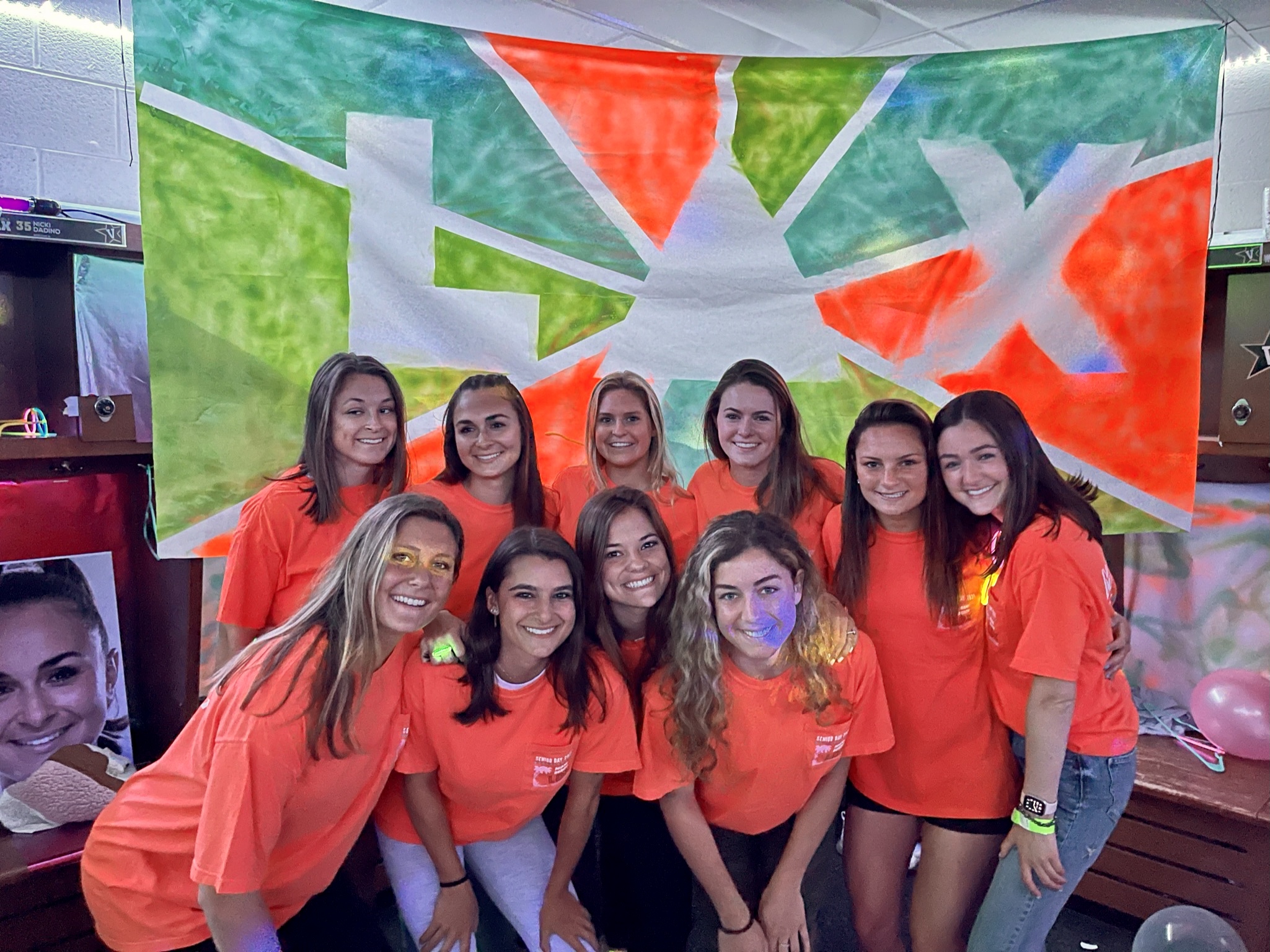
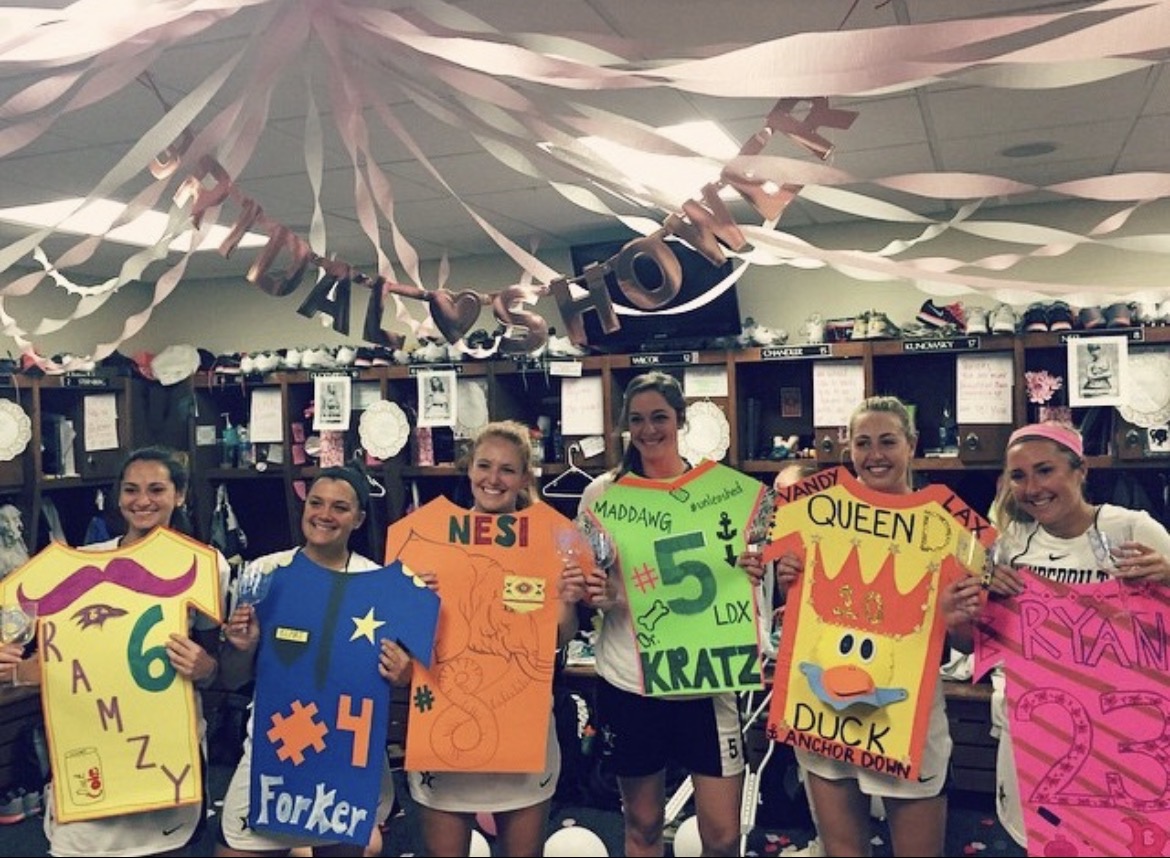
People sustain Vanderbilt lacrosse, not just coming and going at four-year intervals but leaving something of themselves for those who follow. Alumni from across the first three decades will gather for this week’s reunion. Something more than awards and famous wins brings them back—although there will be no shortage of tales told about the wins. They return to celebrate what they helped build. And to savor what, for them, started here.
The late David Williams II, beloved former Vanderbilt athletic director, used to remind student-athletes that Vanderbilt is four years of competition and a 40-year plan.
The lacrosse team managed to prove his point with a decade to spare.
“It’s really hard to overstate how meaningful those four years were,” said Alex Priddy, who played from 2009–12, when asked how she would explain Vanderbilt lacrosse to a new arrival. “Take advantage of the people above you and the people that come in below you. Get to know them as people on and off the field. These people are going to be dancing at your wedding and holding your baby and getting to know your family 10 years down the line. I think college can be a really high pressure, stressful and pivotal time in your life, but really step back and look at the big picture of these amazing people that you’re surrounded by and how they’re going to be meaningful in your life moving forward.”
Understanding the past starts with understanding people. It starts with stories, including the five included here from among the more than 200 Commodores who made a program.
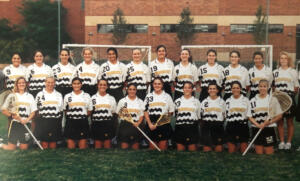
Sue Napolitano (Yoder) (1996-2000): The First Recruit
Yoder never lost a game at Shawnee High School in Medford, New Jersey. When she took the field for Vanderbilt in 1996, the Commodores had never lost a game, either.
Of course, the circumstances were ever so slightly different.
Yoder grew up in the heart of lacrosse country and starred for one of the state’s most successful high school teams. She joined a college program that had just transitioned from club to varsity status. The only freshman to make varsity at Shawnee, she looked in awe at older players who had won national honors and committed to collegiate powerhouses. At Vanderbilt, part of the first recruiting class, she had as much experience as anyone else.
Yet she wanted to be part of making history at Vanderbilt as much as she had wanted to be part of Shawnee’s history. So much so that she called a slightly stunned Stevens, Vanderbilt’s young head coach, to pitch her services. The allure was partly practical. Lacrosse student-athletes often received partial scholarships. A brand new program would gladly offer a full scholarship to a five-star recruit. Still, she ultimately fielded full-ride offers from even some of the bluest of blue-blood programs. She chose Vanderbilt.
“I loved Nashville, loved everything that Vanderbilt had to offer,” Yoder recalled. “It wasn’t even a question for me, I wanted to go there from the minute I stepped foot in the city.”
She quickly set about writing the record book, and she wasn’t using pencil. She scored 53 goals in Vanderbilt’s debut season, a record that has only been bettered twice. She remains the program’s all-time goals leader. The more meaningful entry might be the 48 goals she scored in 2000, still the seventh-best single-season total in program history. Yoder tore her ACL during a 1998 game at Maryland, missing the final six games of that season and all of the following season. Even by the standard of ACLs, it was a difficult recovery and necessitated five procedures on the knee. Doctors warned her she might not play again. Those 48 goals were her answer.
At Vanderbilt, part of Yoder’s future came into focus when she met her husband—Todd Yoder would go on to play in the NFL. But after settling on a human organizational development major, she also used her fifth year to add coursework in child development studies. Along with an abiding appreciation for caregivers she gained going through her own lengthy knee rehab, she used her degree to work with pediatric oncology patients after moving to Tampa, where her husband was beginning his professional football career.
“Working at a children’s hospital is so rewarding, and it’s also very taxing—you take that load home with you,” Yoder said. “But because I’ve been in stressful situations, I’ve had pressure, you’re able to kind of use everything that you’ve learned to just get through it and be able to appreciate how rewarding that position can be.”
In the years since, in addition to raising a family, she’s worked in special education with autistic students, in real estate and other endeavors. She’s leaned on her Vanderbilt experiences at every stop—never more literally than when she started the lacrosse program at Calvary Christian High School in Clearwater, Florida.
With each goal and win (and the Dores never had a losing record in a season she completed), Yoder helped set expectations for a program that wants to compete at the highest level. But details of all those goals fade with time. More vivid are her recollections of breakfasts with teammates at Branscomb and countless other seemingly mundane moments. And more enduring than the records are the daily group chats and regular vacations with former teammates—a different city every time.
Without even knowing it, Yoder and those early Commodores created a template that went well beyond winning records.
“We’ve all been in each other’s weddings, we’ve traveled, we’ve been there for births of kids,” Yoder said. “These are my lifelong friends, and that bond you form going through all the things that you go through together in college, it will last a lifetime.”
Michelle Allen (Byrum) (2002-04): Raising the Bar
Weeks after leading Vanderbilt lacrosse to the program’s first Final Four, Michelle Byrum had to figure out what to do with the rest of her life. Talk about daunting encores.
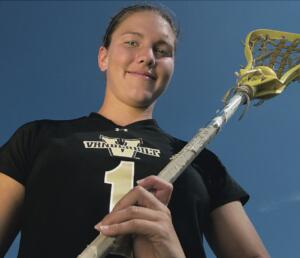 She wasn’t really ready to hang up her stick, but opportunities to play lacrosse beyond college were few and far between. After moving to Columbus, Ohio, she tried coaching for a year as a volunteer assistant at Ohio State. Being around the sport and a team’s energy was fun. But after living a military family’s transient lifestyle growing up, she knew a path that involved following jobs from campus to campus wasn’t for her.
Seeking a way to work with children, she settled on healthcare. She’s now a pediatric nurse practitioner at Nationwide Children’s Hospital, where she’s worked for the past 16 years with a focus in behavioral health. It wasn’t a career she mapped out in college, even if the psychology classes she took as a human and organizational development major have proved useful time and again, but Vanderbilt played its part along the way.
“I don’t think I realized at the time the significance of the Vanderbilt education and the name and the reputation that goes along with that,” Byrum said. “Going through graduate school applications and interviews and job interviews, and even just talking with people in healthcare, it holds a lot of weight. And I did not fully grasp that at the time, but I’m very thankful for it now because I do think it’s opened doors from a professional standpoint.”
Reputation matters. Excellence matters. And she and her teammates did much the same for Vanderbilt’s reputation in the lacrosse world, showing once and for all that a Southern startup could compete with the best in the land.
All because, in Byrum’s case, the people made the place.
Byrum was perfect casting as the program’s first first-team All-American, a latecomer to the sport who came into her own playing for an NCAA newcomer. She only started playing lacrosse as a high school freshman, a year after her family moved to Maryland. More an athlete than a refined lacrosse player in those days, she recalls a high school coach telling her to just keep the ball in her stick and run around during one effort to run out the clock. No one on the other team could catch her.
She grew into the game quickly enough to earn an opportunity to play collegiately, first at Cornell and then at Vanderbilt for her final three seasons. Vanderbilt was closer to her family, who had again relocated to Kentucky in the interim. But more than the allure of the degree or the city, the single biggest selling point for Vanderbilt was the people. Well, a person, in particular. One of Byrum’s closest friends from high school, Jess Roguski had already started what proved to be a Hall of Fame collegiate career with the Commodores. Wouldn’t it be fun, they mused, to play together again.
In 2002, the Dores went 10-6 and were unbeaten in the new American Lacrosse Conference. A year later, Allen was a third-team All-American, just the third Dore to earn the honor. And in 2004, with Allen earning first-team honors, Roguski second-team honors and classmates Bridget Morris and Lauren Peck third-team honors, Vanderbilt went 12-6 and reached the Final Four after NCAA Tournament wins against Loyola and James Madison.
“We had some good leaders who were a couple of classes ahead of us, but I think we saw that our class was very strong and just continued to develop,” Byrum said. “Pretty quickly, we could see what the potential was. But I think it did take a little bit of time to build that belief throughout the team and the culture of knowing we belong in these big games.”
Not a bad return on just wanting to play with your friend—and becoming part of something more with a program that made itself into a place people want to be.
“My teammates were amazing, and those are absolutely the memories that I keep and hold on to,” Byrum said. “There is no better feeling than being on a team and having some success together with your best friends.”
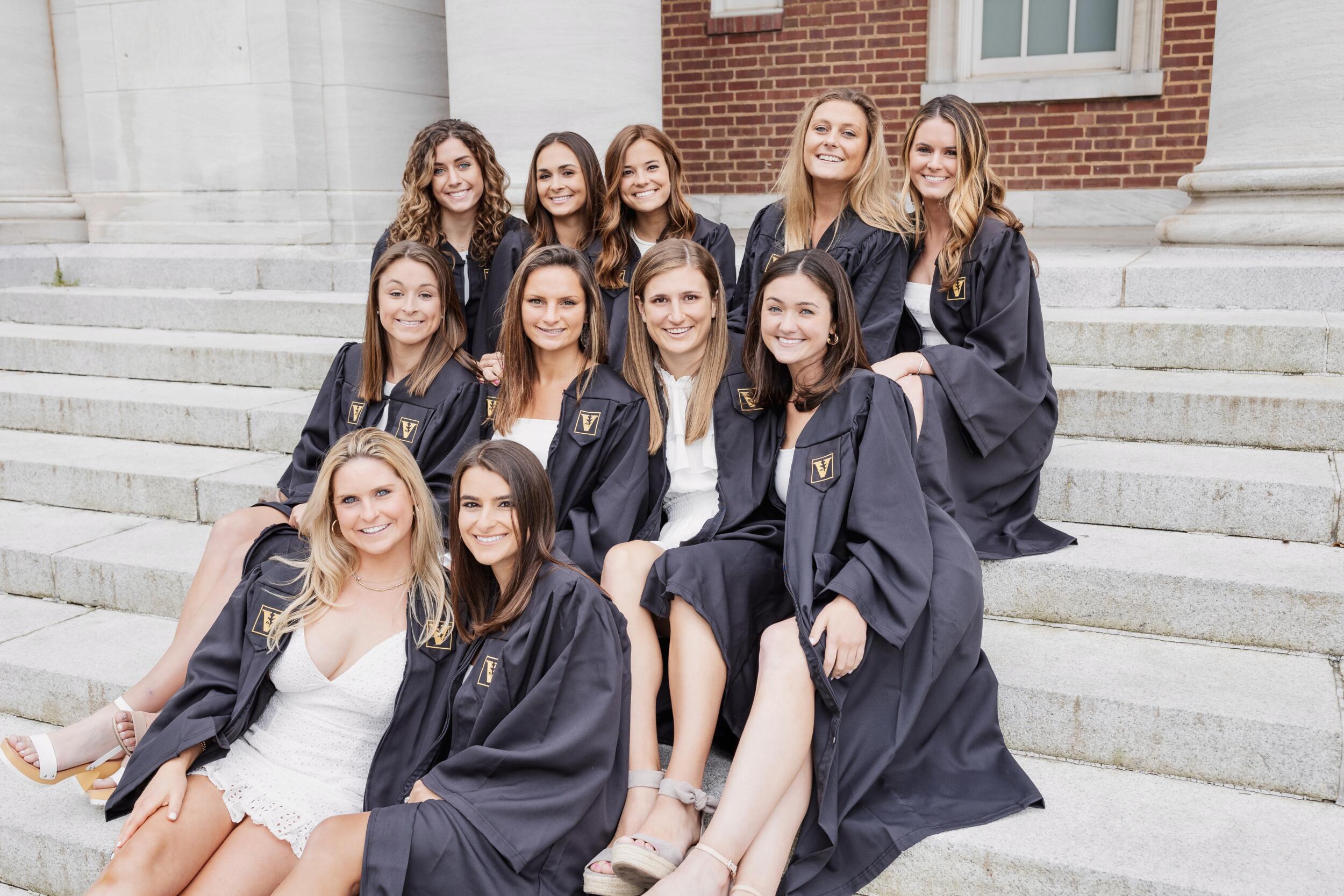
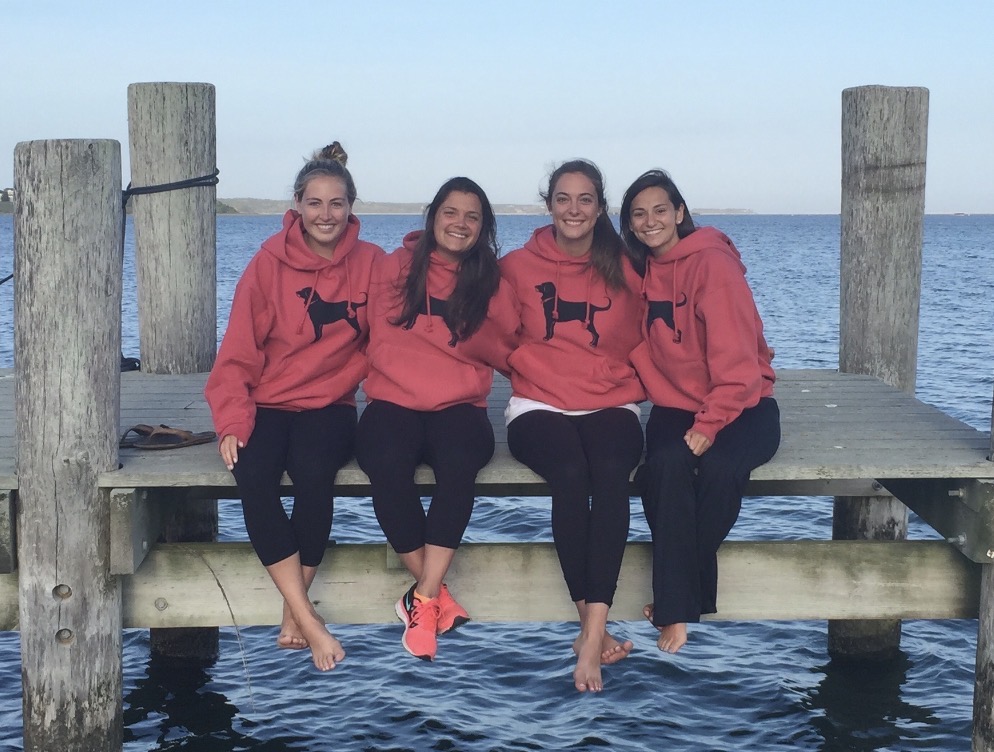

Alex Priddy (2009-12): Preparing Leaders
Alex Priddy played her final game for the Commodores before Hewitt’s time as head coach, and thus before the latter began a leadership mentoring program in collaboration with retired U.S. Army Brig. Gen. Scott Brower, head of Vanderbilt’s Bass Military Scholars program.
But you can almost feel the likes of Brower nodding along when Priddy describes how she thinks about her current job as registered nurse unit supervisor on the pre-op and recovery side of a cardiac operating room, a leadership role she took on after a decade in nursing.
 “Taking care of your people is kind of more important almost than the clinical side,” Priddy said of a lesson learned from one of her nursing mentors, “Because if your people aren’t OK outside of work, they’re not going to be OK and function efficiently at work. That’s something that I’ve really brought into my role as a leader, is just making sure that people are taken care of and knowing there are going to be difficult days.”
Priddy was an excellent lacrosse player at Vanderbilt. Let’s be clear about that. North Carolina learned it the hard way when the freshman scored three goals against the Tar Heels in her first collegiate game. So did national power Duke, which very nearly lost a 2010 NCAA Tournament game against the Dores when they dared Priddy to beat them—and the sophomore scored four goals. As a senior, she was second on the team in goals. You don’t get to a Division I program without being an outlier among the tens of thousands who pick up a stick at some point in their lives.
And these were good years for the Commodores, who went 38-29 and reached back-to-back NCAA Tournaments during her career. Still, as the years go by, her on-field exploits recede from the collective memory. Her appearances in the record book are mostly related to academic excellence, including when she was honored as the American Lacrosse Conference’s outstanding senior scholar-athlete in 2012. She acknowledges she’s not destined for the Hall of Fame. But it’s difficult to imagine that many took more from their Vanderbilt experience—or are using those lessons in more consequential ways as a result.
You don’t need to be a legend to be an important part of a program’s history. You don’t need to be an All-American. To the relief of just about every current and future Dore who stresses over finals, you don’t even need to be Priddy’s equal in the classroom. You just have to take on the challenge in front of you, whether when Duke face-guards your teammate or you’re honest enough in your self-assessment to realize you don’t have the bandwidth to manage both pre-med and lacrosse and instead throw your heart and soul into nursing. You find ways to persevere, whether scoring goals against the Blue Devils or commuting to nearby Lipscomb to complete the only microbiology class that fits your schedule.
“I think being an athlete really teaches you discipline, resilience and how to perform under pressure, which has carried over directly into my career in healthcare,” Priddy said. “Learning how to balance academics, athletics and life in general has helped me become more efficient and adaptable and accountable when working with a team in the working world. And it has set the standard for how I can approach challenges and lead within a team in my work environment.”
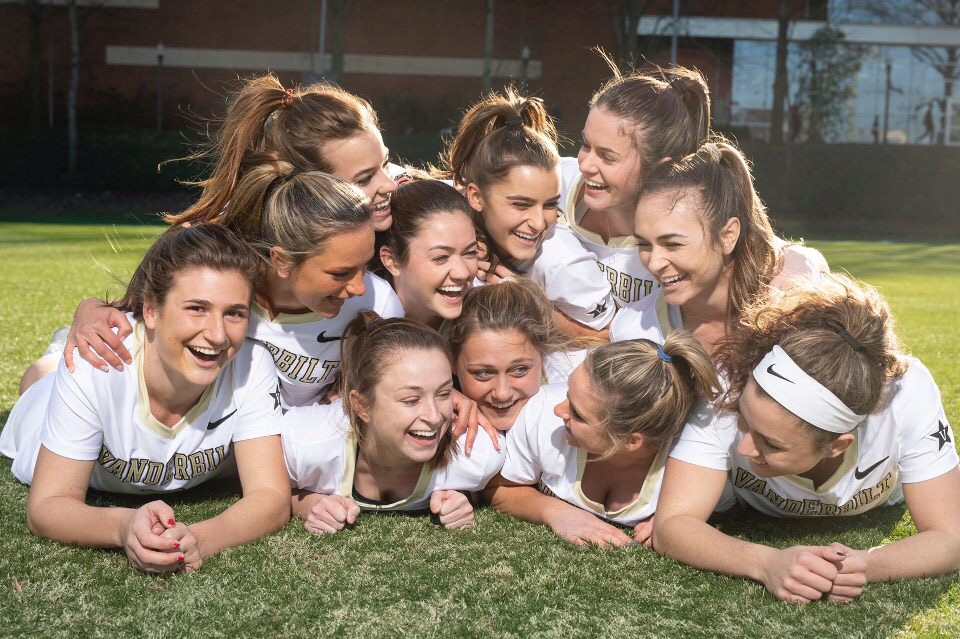
It is not, after all, so very different from a locker room. By the time she graduated, Priddy and the ankle she injured severely in high school were ready to move on from the sport. But not from what she learned from Anastasia Adam and Allie Frank, two years ahead of her at the Severn School in Maryland and whose lead and advice she followed to the lacrosse team at Vanderbilt. And not without the bonds she forged with the nine other members of her class, a group that started and finished together with nary a defection. With them, on the field but also on bus rides, in airports and simply sitting around dorm rooms, she learned about being part of a group with a shared goal. She learned how people challenge and support each other. In other words, when the time came, how to lead.
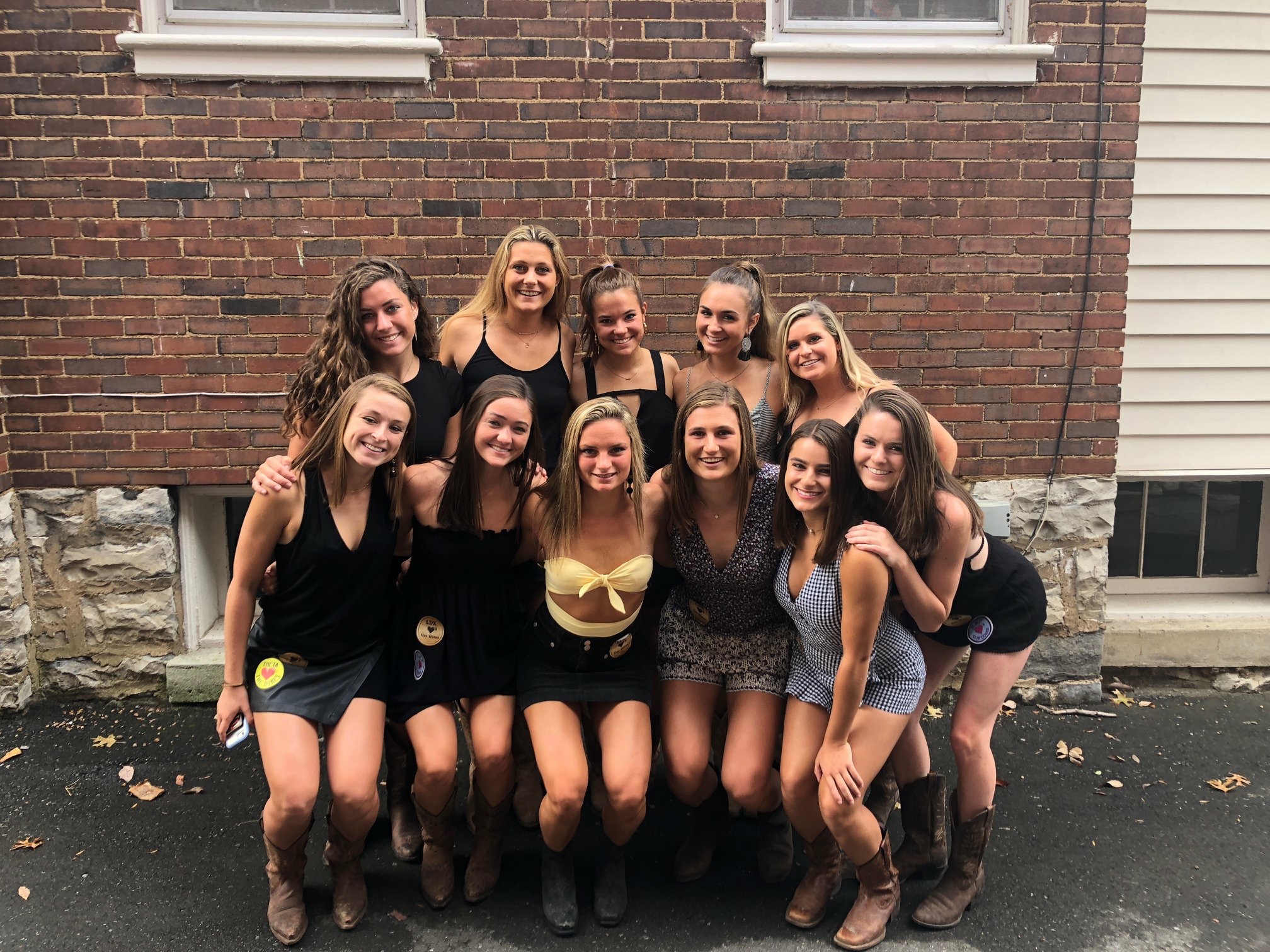
“They are probably nine of the most important people in my life, truly,” Priddy said. “We talk regularly, we show up for each other through every stage of life: weddings, babies, difficult situations as well. This built-in community that Vanderbilt has given me is something that I’ll never take for granted and I’ll cherish throughout my entire life.”
Melissa Hawkins (2018-22): A Unique Program
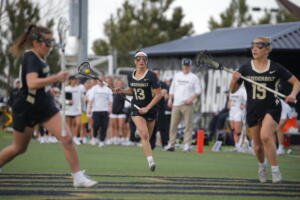
By the time she was in high school in Bridgewater, New Jersey, Melissa Hawkins had learned two important things about herself. The “bull in a China shop” style that always landed her in foul trouble on the basketball court made her one of the country’s elite lacrosse recruits. And second, she had a calling beyond the lacrosse field.
At Vanderbilt, she didn’t she have to choose between two paths.
Among only a handful of Vanderbilt lacrosse alumni to ever play professionally, joining the likes of teammate Bri Gross and three-time All-American Carey, Hawkins is today a teacher and the newly-appointed athletic director at the Tennessee School for the Blind in Nashville. Both passions were born in her New Jersey childhood, lacrosse after a family friend steered her toward a sport that made use of her competitiveness and the special needs community in a family that placed great emphasis on service.
In high school, she worked in a peer-to-peer mentoring program that matched her with a special needs classmate who was non-verbal and often acted out physically. On a field trip, she was swept up as what amounted to collateral damage in one such episode and suffered injuries that hospitalized her for more than a week. Her family and friends were horrified. She was only curious. She and her fellow student had spent considerable time together by then and worked well together. Her presence always calmed him. She wanted to understand why— neurologically, emotionally, behaviorally—something went wrong in that moment.
Vanderbilt was struggling through a rare stretch of difficult seasons at the time, but the ranking that caught Hawkins’ eye was the university’s top-rated special education program. As the years have gone by, she’s heard from friends across the sport who had an interest in teaching but met with only lukewarm support from programs worried about the scheduling demands of a discipline that requires extensive hands-on, classroom time. But from the start, then-head coach Sweezey and associate head coach Hewitt made clear that if she was willing to be creative to get her lacrosse work in, they had her back.
“I look up to Beth more than anything some days,” Hawkins said of the mentor who became her head coach as a sophomore. “She’s my mom away from home.”
More than a few people over the years might have caught a fleeting glimpse of someone in shorts and a practice jersey, lacrosse stick in hand and mouth guard tucked into her sports bra, running across the Peabody lawn and through the hospital to reach the practice field—sometimes only for perhaps 30 minutes before having to depart early for another class. But it worked. She even used the complications of the COVID years to her academic advantage. She earned her undergraduate degree from Peabody’s special education program with an emphasis in severe disabilities and her master’s in the school’s visual disabilities program.
None of this means Hawkins viewed lacrosse as merely a useful vehicle to other goals. She wouldn’t have been a three-time All-AAC selection, including back-to-back first-team honors, if she wasn’t driven to succeed on the field. She certainly wouldn’t have kept playing, first in the Athletes Unlimited pro women’s league, then as the only woman on the semi-pro Nashville Ignite of the North American Box Lacross League and winning a gold medal with the United States women in the 2024 World Lacrosse Box Championships.
She didn’t have to choose between present and future, in large part because everyone around her supported her. The path could have been isolating. It could have stirred jealousy or grumbling about special treatment. Instead, when she reached out from her new job at the Tennessee School for the Blind to see if a few players could come out to a track and field event, the whole team showed up. And recently, when she needed to talk through some career situations—and maybe just vent—she called Lyle Davis, the alumna who helped start the program all those decades ago and went on to work in special education.
She got to play in the NCAA Tournament. She played in a conference tournament final. She held one of the nation’s best players in check to earn conference player of the week honors. She came to Vanderbilt to do those things, and she savors those memories. But she also came to build a future.
“Of course I would have loved to win a national championship,” Hawkins said. “But I have friends from home who were on national championship teams and they have no sort of connection with people in their class. Lacrosse took over their world, took over everything and created a distance in relationships rather than knit it together. And I think at Vanderbilt, we at least tried to say why can’t we be a team that is really great academically, can be super social and also be great on the field and produce those wins.”
Alex Gladding (2024-present): Inheriting History
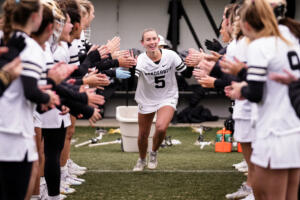
How much can the world change in 30 years? Well, let’s just say there weren’t many people on the first Vanderbilt lacrosse team whose summer job involved giving alligator tours to tourists in the Florida Everglades. In that unique way, as well as the junior defender’s All-AAC honors, Alex Gladding is representative of the sport’s growth beyond the Mid-Atlantic and Northeast hotbeds that have long stocked rosters nationwide—growth that sprang from roots that included the expansion of the college game to places like Nashville.
A product of South Florida’s emerging lacrosse culture, Gladding was also easy to recruit. Her dad, Crane Gladding, is a Vanderbilt alumnus (and the entrepreneur behind the transportation company whose activities include tours for cruise ship passengers). She grew up on stories of his human and organizational development capstone project and his fraternity escapades alike. She committed the day after her official visit, scrapping the rest of her planned recruiting stops. The campus was familiar to her long before she enrolled.
But for all of that, her Vanderbilt experience—the one she’ll one day spin stories about with her kids—began in Texas. The summer before her freshman year, classmate Rocky McCauley’s family organized what amounted to a student-athlete retreat at a lake house. Mikela McCauley, Rocky’s older sister and now an assistant coach at Colgate, had just finished playing for Vanderbilt, so the gathering included Dores new and old. The new class learned about each other and about what Vanderbilt lacrosse meant to those who knew it.
“That’s one of the top things that Vanderbilt lacrosse does such a good job with is creating the culture of inclusion and just loving each other and supporting each other no matter what,” Gladding recalled. “That definitely helps the transition in college.”
That’s how history happens, how it moves forward. The full scale sometimes comes into view, whether it’s a recent graduate like Hawkins connecting with a pioneer like Davis or Gladding talking about Carey’s jersey that hangs in the locker room. But history more often resembles the overlapping bricks that make up a house, each one connected to those put in place just before and after, all the way back to the foundation. Today, a name from the past might elicit hesitant recognition, if it is known at all. But the traditions, expectations and values have reached the current generation intact, passed down one person at a time.
For Gladding, it came from people like Nellie Blaze, Nancy Halleron and Sammy Nuchow. Now a graduate student in her final season, Halleron made an impression on Gladding way back when the latter made her recruiting visit. If this is what Vanderbilt lacrosse people are like, Gladding thought, sign me up. Now, it’s Gladding’s turn. A junior captain this season, she’ll soon be the senior welcoming the wide-eyed freshman. She knows what she’ll tell them.
“Take risks and learn from your mistakes,” Gladding said. “College is hard, balancing everything. Vanderbilt isn’t easy, and there’s a lot of stress from academics to career steps and all of that. So if you’re willing to try things and learn and just talk to everyone, people here want to help you. Vanderbilt has such a great connections. I think that’s something that I wish I’d embraced even more, just ask for help when you need it and be ready to learn.”
The Next Chapter Awaits
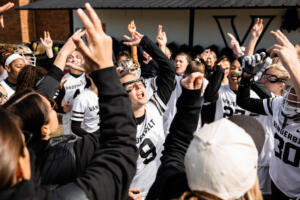
Less than a month before the anniversary of lacrosse’s first game, Vanderbilt launched Anchored for Her as part of the historic Vandy United campaign. Anchored for Her’s stated goal is to honor the legacy of Vanderbilt pioneers, from Stella Vaughn at the dawn of the 20th century to those who lobbied for lacrosse near the turn of 21st century, by positioning the university as the premier destination for women’s college sports.
Soon thereafter, as the program began its next 30 years, Vice Chancellor for Athletics and University Affairs and Athletic Director Candice Storey Lee announced plans for a new lacrosse and soccer stadium.
“Candice has done a great job emphasizing women’s sport,” Gladding said. “She was a college athlete, and she understands and knows where we’re coming from. I think all the women’s sports, all the athletes, we fight for what we want, and Vanderbilt supports us no matter what. They’ve done a great job to give us opportunities to succeed. The new stadium will be awesome. It’s great for the future of women’s lacrosse, and I’m sure the girls who come after us will love it.”
If so, it’s because the stadium rests on the strongest possible foundation. The Vanderbilt community will build the new home through their philanthropic support, honoring more than 200 women and counting who built a program about much more than lacrosse.
“I think a lot of players understand that there were people there before them who paved the way,” Yoder said. “The relationships that you form, everything that you get out of college, it goes so fast. All of us wish that if we could just go back for one more game, one more year, one or more anything, we would go back and do it in a heartbeat. When you’re in it, it just goes by so fast.
“I’d encourage people to take it all in and run with the relationships that you make and everything that you’ve learned. All of the good, the bad, the ugly from playing a sport, you take that and you apply it to your life moving forward.”
About the Anchored for Her Campaign
Through Anchored for Her, Vanderbilt’s comprehensive fundraising campaign, the university is positioning bowling and its broader women’s athletics programs as national leaders in advancing women’s sports. Anchored for Her’s initial $50 million goal will fuel investment in sustainable success for a new era of collegiate athletics through facility enhancements, endowed scholarships, coaching and staff positions, capital support and naming opportunities, team-specific Excellence Funds, the Women’s Athletics General Fund and the Competitive Excellence Fund.