
NASHVILLE, Tenn. — As a son of New Hampshire, Tim Corbin knew families like the Espositos long before he ever filled out a lineup card or sat around the kitchen table on a recruiting visit. Michael and Roseann Esposito and their sons, Jason and Mark, happened to live in Bethany, Connecticut. But from their Italian surname to a no-nonsense forthrightness—not to mention a passion for baseball—they are a New England archetype still far from extinct from Cape Cod to the Connecticut coast.
Nearly two decades ago, those shared New England roots helped Vanderbilt’s head coach forge a bond with the family as Jason, then a highly-touted high school standout, weighed options from college scholarships to MLB signing bonuses. In laying out Vanderbilt’s mission, a lifetime taught Corbin that he would have no greater ally than Roseann.
“A mom looks at it from a unique perspective,” Corbin said. “Baseball is baseball, but who’s going to take care of my kid? Who’s going to watch over him, hold him to a standard, discipline him? I think when moms look at that, they’re not looking at an MLB uniform. For the next three or four years, is the group of people over there going to look after my child?
“A lot of moms up in New England are that way. And in a lot of ways, Roseann was a very firm voice inside that family, making clear ‘No, my kid’s going to school. He could go play professional baseball, but that’s not how my husband and I look at it.’”
Esposito chose Vanderbilt. He inherited third base from a legend in Pedro Alvarez and emerged as one of the best defensive players in program history. He was an All-American and RBI machine, part of Vanderbilt’s first College World Series team in 2011. What he contributed is easy to find in the record books. What he learned prepared him for the life that awaited—starting a family, finding a calling and always growing. And it’s what he learned here that brought him back to Vanderbilt.
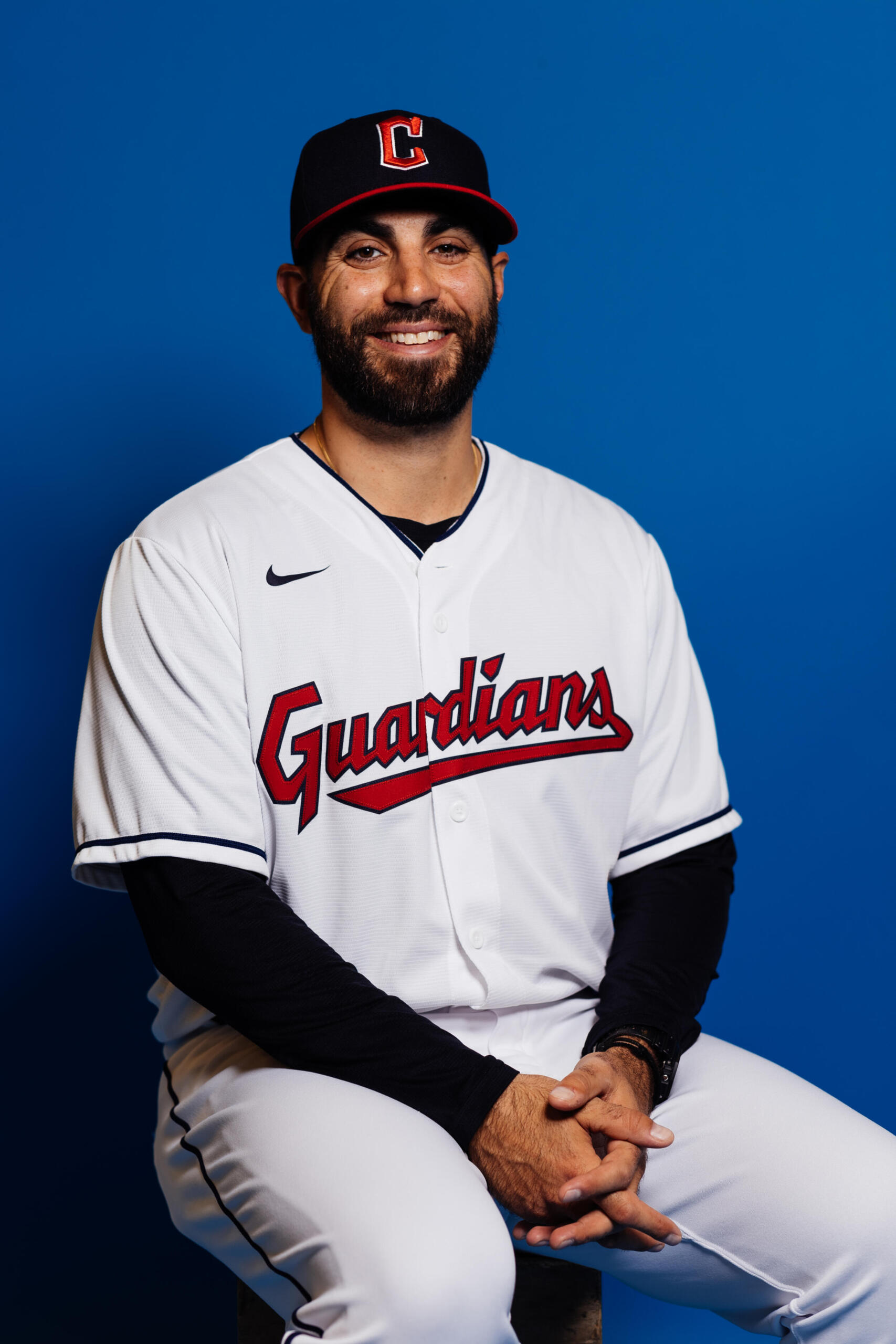
After more than a decade playing and coaching professional baseball, including as a hitting instructor with the Cleveland Guardians for the past eight years, Esposito returns to his alma mater as an assistant coach. If coming to Vanderbilt the first time helped him discover what was possible, coming back gives him a chance to return the favor for a new generation of players sitting around kitchen tables and debating the best path forward.
It’s why, with the possible exception of learning she was going to be a grandmother twice over, Roseann has rarely sounded happier than when her son told her the news this summer.
“She was really happy because she knows who Coach Corbin is—she knows what he stands for,” Esposito said. “She knows Vanderbilt helped me become who I am.”
Becoming a Commodore
All all-everything prep player in Connecticut, Esposito was selected by the Kansas City Royals in the seventh round of the 2008 Major League Baseball Draft. The team was eager enough to sign him that bonus negotiations eventually reached seven figures, nearly $3 million in today’s dollars. He turned down the offer, instead settling into a dorm room and scrounging for pizza money alongside the rest of Vanderbilt’s freshman class that fall.
“I think I had do some self-assessment as a 17-year-old kid and understand that I might not be ready to go off into the world and just play professional baseball,” Esposito said. “I think the best thing at that time was being honest with myself and being honest to my parents—and my parents were instrumental in the decision. They supported me either way, but they also gave me an understanding of what an education means for the rest of my life.”

Fall isn’t easy when you play baseball at Vanderbilt. Under Corbin, fall is when you earn your spring, hotshot draft pick or not. And for someone who had a clearer view of himself with a bat in his hands on the field than a pen in his hand in the classroom, Vanderbilt’s rigorous academic standards were an added challenge all their own. There were a few calls home, questioning just what he had gotten himself into. But as Corbin had promised, there were resources available—all you had to do was accept the responsibility to ask for help.
On the field, the transition to the SEC appeared seamless. Esposito started every game at third base and led the team in stolen bases. He only got better, hitting .359 as a sophomore and leading the team in RBI and the SEC in doubles, then pacing the Commodores in RBI and doubles again as a junior in 2011. That season offered unforgettable moment after unforgettable moment, from his walk-off home run against Louisville in the regular season to the team claiming a share of the SEC regular season title to the super regional sweep of Oregon State that sent the Commodores to their first College World Series.
Yet for all the highlights, collective and personal, few are etched in his memory as clearly as one that wasn’t captured by the cameras. Sitting in the team’s classroom at Hawkins Field early in that campaign, he remembers Corbin writing a record on the eraser board. The numbers didn’t matter. What mattered was the dash in the middle—representing the actions, emotions and accountability that the people in that room controlled.
“It was just the experience with all the boys—with all my friends, teammates—that made the experience so special,” Esposito recalled.
 But if his path is obvious in hindsight, it wasn’t at all clear to him in the moment. He never thought about coaching. Not while playing three seasons at Vanderbilt. Not after being drafted by the Baltimore Orioles in the second round of the 2011 MLB Draft. Not even when he returned to earn his undergraduate degree in 2013 while playing in the Orioles system.