

Sept. 2, 2010
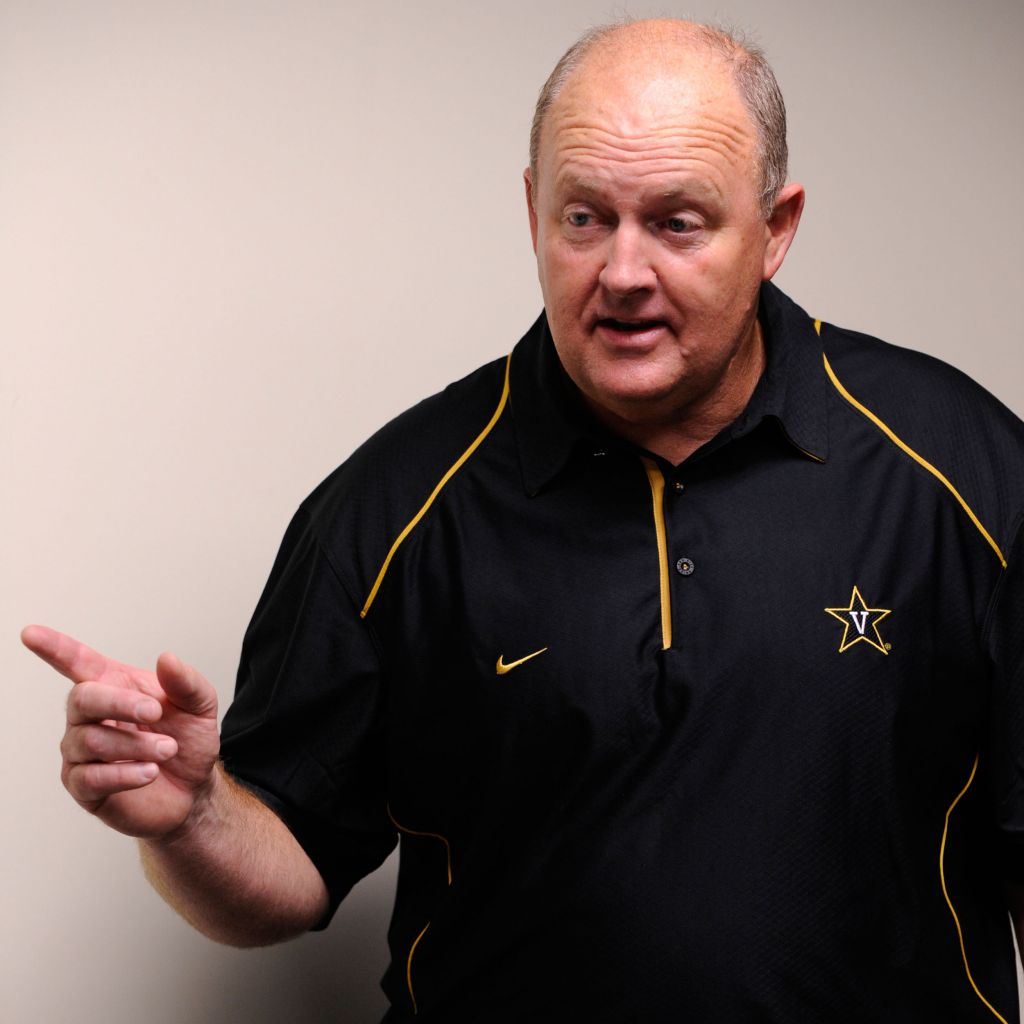 Commodore Nation: What’s the best piece of advice you’ve been given about being a head coach?
Robbie Caldwell: “Delegate. You’ve got good people, you surround yourself with great coaches, which I feel like ours is as fine as any in the country; but you know I’ve always done things in my group–and whatever responsibilities I was given as an assistant head coach–and I liked to do it. I grew up working, and I thought that was your responsibility, so that’s been the hardest thing for me is to let our people work. They have responsibilities, and they’ll take care of them better than anybody. I just need to stay out of their ways sometimes. I want them to be able to work. I’ve never worked under a job description–whatever needs to be done, I was just always trained that way in this business.”
CN: Looking forward to the first game, how do you think you’ll act on the sidelines as a head coach?
RC: “Coach Johnson was very emotional, yet he could keep a calm head when it was time to make a decision. I hope to be able to do the same. I’ve got to, because it involves everybody now; but I will continue to be emotional, because it’s an exciting, fun time. On offense, the players have to play with a more controlled emotion because they have to make decisions. If a guy moves six inches, eight inches, it may change the whole blocking scheme. But defensively, you can be a little more emotional, so when [the defense is] on the field, I want to make sure I show that, as well.”
CN: What are the differences in philosophy between Coach Johnson and yourself?
RC: “Really, none, in the fact that we both grew up in the football realm thinking defense first. We kind of had the philosophy that if they don’t score, we’re going to be okay. That’s always been our deal…. We will continue the same philosophy: attacking defense. You know, Coach Fowler and Coach Bryant would always ask me–and not just me, but any offensive guy–‘what do you think about this,’ because we’re the ones who’ve got to block it, try to stop it. We try to share ideas. What’s the hardest for us as an offensive line to block? And in return, defensively, they would say `This is the toughest play. This is hard for us to defend.’ We share ideas all the time.”
CN: Coming into camp, you’re the most familiar with the offensive line. What can you tell us about that unit? RC: “One thing about that group is that we always ask them to play two positions to help them get on the field sooner [and] gain a greater knowledge of the system, so most of them have done that. Our last scrimmage in the spring, most people did not see it, but we had seven guys and they all played different spots and had a ball, and we did very well offensively. So the continuity’s there, but we’ve got to add some pieces to the puzzle. We’re going to have to have some freshmen step up, and that’s what they came here for. That’s part of the decision, the great academics and the chance to play early. We’ll give them that opportunity.”
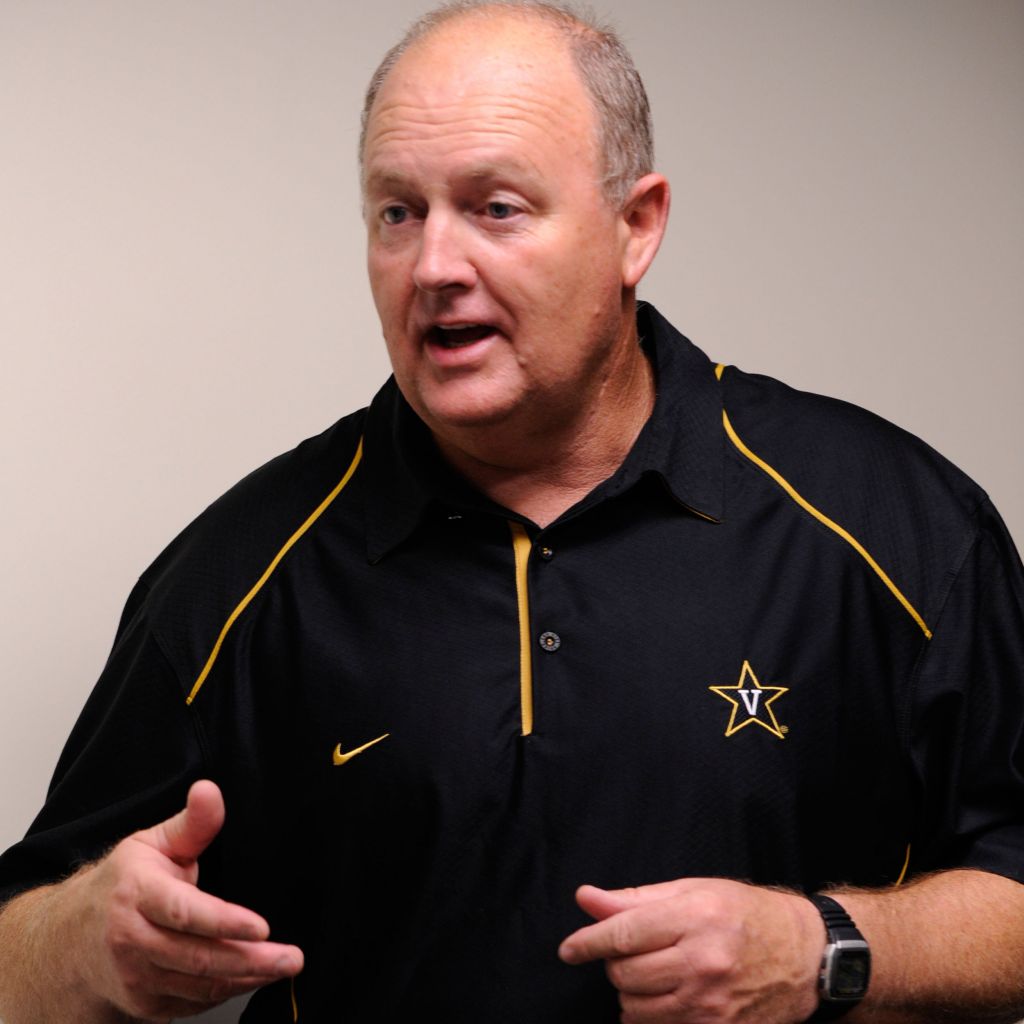 CN: In the weeks since your promotion, have you had any time to sit back and soak it in?
RC: “No, but I tell you what, I’m enjoying it. I’m so proud. I love selling Vanderbilt. I really love what this university stands for. The true student-athlete. It’s just very special. I think that’s the way college athletics should be.”
CN: What can you say about the support that the Vanderbilt community has shown in the first few weeks?
RC: “It’s been tremendous. Every administrator and every coach here has been so supportive. It would bring a tear to your eye, just when you walk down the hall, everybody wants to know what they can do to help. And I want them to know whatever we can do to help their program, we’re in this together. If they keep score, I love it, whether it’s shooting marbles or whatever, I’m a competitor, and I want to help every member. I made a stupid statement, which is very common from me, when I was talking about the different sports I played growing up. I made the comment, `I hated basketball but I played it to get out of work.’ I wanna set that straight. I did not hate basketball. I loved basketball. What I should have said was, I wasn’t very good at it. But I continued to play it, worked hard. Matter of fact, my basketball coach called me last week, and he said, `If you didn’t like basketball, you sure didn’t show it. You worked hard.’ I told our basketball teams out here, I’m so proud of them. What they’ve accomplished has just been tremendous.”
CN: You were mistaken for a doorman during your visit to Media Day in Birmingham. Are you becoming more recognized here in Nashville?
RC: “I don’t know. I wear my Vanderbilt stuff everywhere, so people can associate it. I love Nashville. My daughter, this is what she knows as home. She was six when we got here, and she just loves it. My wife does, too.”
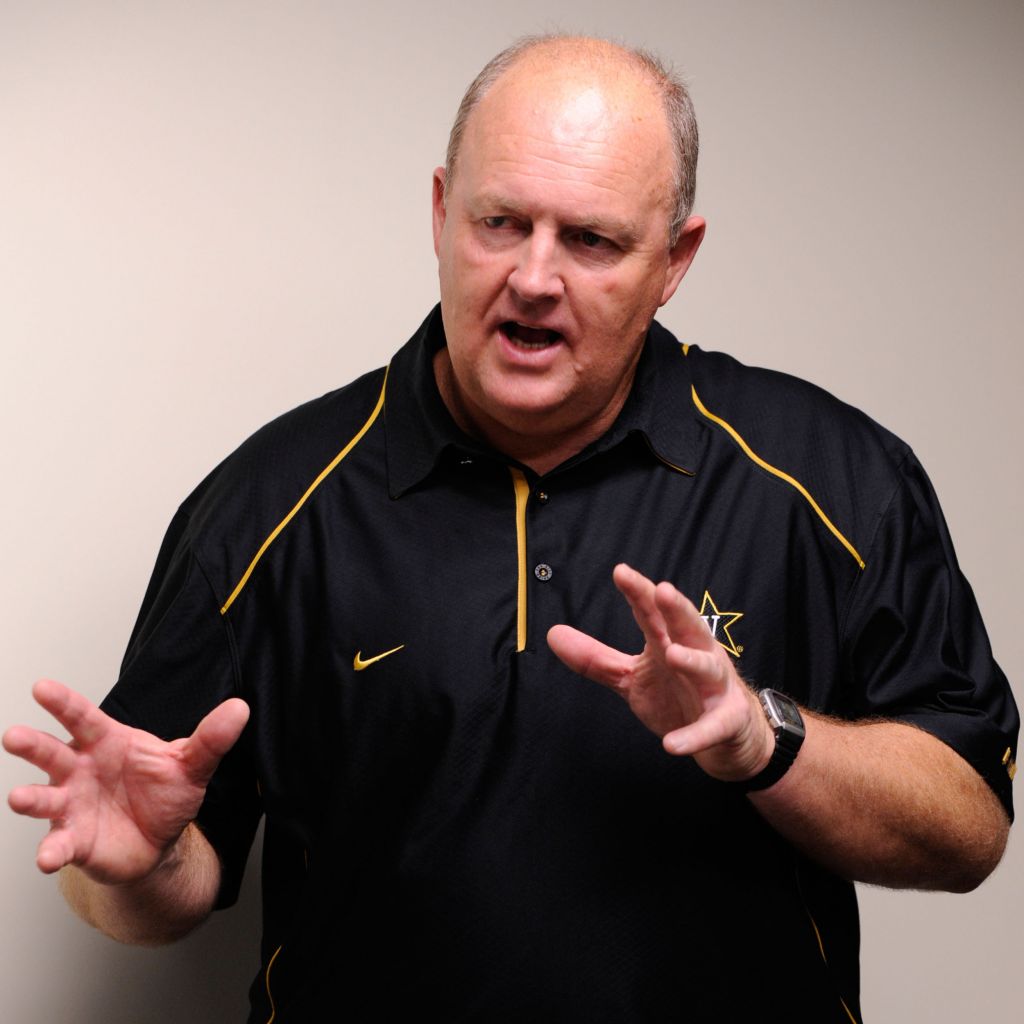 CN: Where did you develop your sense of humor?
RC: “Jerry Clower’s a hero of mine, and I used to listen to all of his stuff, because we grew up in area much like what he did and people I grew up with talked like him. Then I got to Nashville, and I met a man named Tandy Rice, [Jerry’s] manager, and what a thrill that was. He gave me a Jerry Clower road sign. They named a road in his honor, and he gave me one, and man, I display it with pride. I’ve got pictures of Jerry, all his albums, tapes, you name it. I’ve got some stories just like his, so it was very special to me.”
CN: Have you had any other encounters with celebrity since you’ve been in Nashville?
RC: “Not really. Shook some hands, but not really sat down and talked with them. But I like to meet all people. It doesn’t matter to me. I tell you what, I was just upstairs talking with a man putting sheetrock up, and I’ve done a little bit of that. He was walking on the stilts. That’s an art. And it’s good to see those guys pour a little concrete. I’m fascinated by the job that they do. It’s tremendous. I’ve got a round window in my office, and that’s an art. I hired a master carpenter to work [with] me when I was living in Cary, North Carolina. I was coaching at UNC, and we had an unfinished basement, so my wife found this master carpenter. I got to know him, and he would tell me what to do, show me and then if I messed up, he’d fix it. It was great. We built these arch doorways. I said, `Man, this is just amazing how people could figure all that out.’ Even cut a window out of the side of the house, he made me put the siding back on, and he showed me how to do it. He said, `You’ve got to do it’ and he’d leave me and come back and check on it. It was a lot of fun, I learned a great deal.”