
Jan. 11, 2016
By David Dawson | Subscribe to Commodore Nation
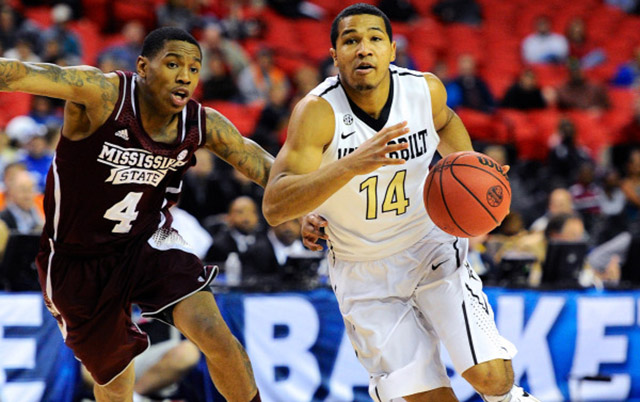
Their names can be found on the roster, but rarely in the box score. They run all the wind sprints at practice, but seldom get to run any plays during a game. They sit through all the film sessions, but hardly ever see themselves on the screen.
Welcome to the world of the walk-on, where the dangling carrot of game-day glory usually remains just out of reach.
It’s a situation that requires tremendous mental toughness, and it’s a role that only a small percentage of athletes are willing to accept, much less embrace.
“It was definitely a little tough, at first, knowing that the starting 11 was pretty much already set, and that my main job was just to push them in practice,” said Vanderbilt sophomore Carley Bogan, who joined the soccer team as a non-scholarship player this fall after transferring from William & Mary. “That was kind of a harsh realization for me.”
But Bogan  and so many of the other walk-ons in the Vanderbilt athletic department  has been able to clear that psychological hurdle and find an alternate source of motivation. Instead of being driven by the prospect of prestige, most walk-ons do what they do because they love their sport, their school and their teammates. And they don’t operate under any illusions.
“I knew exactly what I was coming into, in terms of being a walk-on, and I embraced it from the beginning,” said guard Phillip McGloin, a sophomore on the men’s basketball team from Washington, D.C. “I enjoy it. Practice is fun for me. Basketball is still fun for me. Every time I get to play, I enjoy it.”
There are, of course, countless stories of student-athletes who have made the team as a walk-on, and then developed into impact performers  or even big stars  for their respective teams. But those situations are rare. In most cases, walk-ons remain in a reserve role for the duration of their careers.
As such, most walk-ons have to maintain a big-picture mentality, and gain satisfaction in knowing that they are helping a cause bigger than their own.
“It is definitely tough, knowing you might not get the same possibility as some of the other players,” said senior Carter Josephs, a four-year member of the men’s basketball team. “But just being a part of the team and being with a great group of guys is something I really enjoy. That is the main reason why I’ve stayed all four years.”
Josephs, a native of San Antonio, has lived on both sides of the street during his time at Vanderbilt.
He arrived on campus as a “preferred walk-on”  which essentially means he knew he was being given a spot on the team, but he wasn’t receiving a scholarship. As expected, he played sparingly as a freshmen, seeing action in just six games during the 2012-13 campaign.
But the following season, when the Commodores endured a rash of injuries, Josephs was thrust into a prominent role. He played in 20 games, including making one start, and became a fan favorite at Memorial Gym. Josephs logged a career-high 20 minutes of action against top-ranked Florida, and averaged 16 minutes of playing time during the final six games of the year. After the season, head coach Kevin Stallings awarded him a scholarship.
“That was awesome  just to have your hard work appreciated,” Josephs said. “I mean, I knew it was appreciated all along, but just to have tangible evidence of it was really cool. It was a good gesture, a nice gesture and something I really appreciated.”
During his junior season, and thus far during his senior year, Josephs has served a more limited role on the team. But through it all, he said his teammates’ attitude toward him has remained the same  and his approach to being a member of the team has, too.
“People ask me a lot if I felt more a part of the team (during my sophomore year) than I did my freshman year,” he said. “But honestly, here at Vanderbilt, I feel like walk-ons feel as much a part of the team as any other player, any scholarship player. I felt included from day one. I never felt more a part of the team when I was playing than I did when I was just practicing. I think that is a great part of the culture here. Just the culture of inclusion. So it is really cool in that respect.”
Bogan, like Josephs, said she felt accepted by her teammates on the soccer team. However, the Pittsburgh native did admit there was an awkward moment or two on the day when she and fellow walk-on Danielle Snajder showed up for practice in the second week of the season when the team had already played two games.
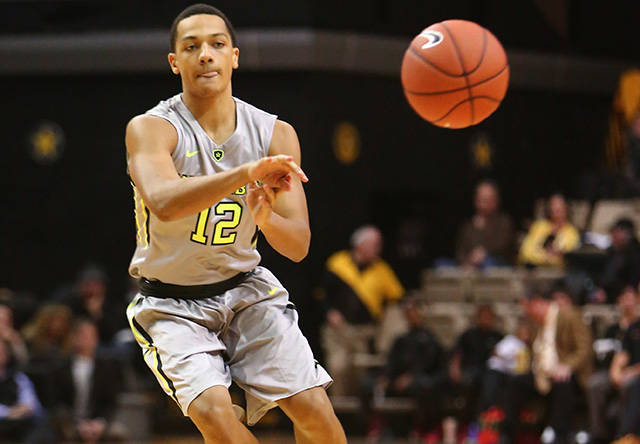
“When we first walked into the locker room, the other girls were like ‘Who are you guys?’ And we were like ‘Oh, nice. Great,'” said Bogan with a laugh. “But after we made the roster, the girls were telling us ‘good job’ and at practice they were patting us on the back. To be honest, I didn’t really expect it at all. It was a really welcoming environment.”
Bogan said she initially perceived there was an established hierarchy among the girls on the team  and that she and Snajder were pretty far down the list. The lowest rung, in fact.
“It seemed like the freshmen were (at the bottom of the pecking order) and then the walk-ons were lower than that,” said Bogan, again breaking into a big smile.
But she said those perceptions faded immediately, and that she soon felt like every other player on the team.
“The girls never divided the team between the starters and non-starters,” she said. “I never felt like I was invaluable member of the team.”
Vanderbilt women’s basketball head coach Melanie Balcomb believes that walk-ons can potentially play a very important role on the team  not necessarily in regard to points and rebounds, but rather in terms of passion and resilience. Balcomb said she feels that the two walk-ons on her team this year  Myka Dancy and Miaya Seawright  can be inspirations to the scholarship players.
“Our two walk-ons are showing that, hey, it’s a privilege to be on this team,” said Balcomb. “There’s a lot of entitlement among the millennials  and they get kind of comfortable because they are given a lot of things. But I think the walk-ons (serve as a reminder) that there are people out there who would kill to be in (the scholarship players’) shoes. … The walk-ons give the other players an example to look at.”
Josephs said he knew from the start that the bulk of his work during career would probably come outside the spotlight  in unglamorous places like the weight room and the practice gym.
“I definitely came in thinking I was probably not going to play that much,” he said. “I just wanted to be a part of it and help the team in any way I could. That was really what my role was, just pushing the guys in practice and doing what I could to help the team.”
The bigger-picture mindset seems to be a common thread among the walk-ons. And even though they might occasionally think about potential rewards  such as increased playing time or perhaps even a scholarship  they gain their most satisfaction from the more intangible aspects of their roles.
“It would be nice for a couple of books to be paid for  I am going to be honest,” Bogan said. “But that’s not what drives me. I am more just gunning for a chance to contribute to the team. It’s not even about starting for me. It’s really just about contributing. Because I do feel like I can help this team. And that’s the way I am going to look at it. It is kind of my way to say thank you to the girls.”