
May 9, 2007
CHC- First Athletic Events in 1886 (pdf) | CHC Archive
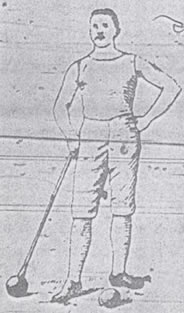
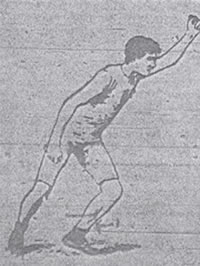
The illustrations accompanying this story are from the Nashville newspaper “The Daily American.” In this era of publishing in 1886, photographs were not used for illustrations, but drawings and sketches were included.
 |
|
Vanderbilt University was founded in 1873 without any concept of athletics. A large number of the faculty demanded that the university devote its attention to educating their students. Physical education was not encouraged during that first decade.
Under the direction of Dr. William M. Baskerville, the Vanderbilt Athletic Association was formed in 1886. On May 7, 1886 the first “Field Day” was organized and became a popular event for decades. That first Field Day was held at Nashville’s Sulphur Springs Park (later Athletic Park and Sulphur Dell) with a day of track events and a Vanderbilt vs. Sewanee baseball game.
The Daily American gave this preview of the 1886 event that can be considered the day athletics at Vanderbilt officially began:
The athletic contest and exhibition at the Base Ball Park this afternoon by the Vanderbilt Athletic Association will no doubt be witnessed by a large number of invited guests. The invitation state that the exhibition begins at 2:30 p.m., but this is error, as time will be called promptly at 2 o’clock, to give plenty of time for the base ball game which follows the regular programme.
The game will be played by Sewanee and Vanderbilt nines, and much interest is manifested in the result. The Athletic Association, as has been stated, is a new organization, but it already numbers one hundred members, and with the commendable objects which it has in view–the encouragement of physical culture and manly sports, it deserves all praise.
The time has passed when intellectual culture, at the expense of the physical man was the rule, or rather the ancient idea again obtains, and the old truth so well understood among the Greeks and Romans that the highest and healthiest intellectual development was only possible with the most highly developed physique, is again becoming recognized among our colleges.

Hence it is gratifying that a first class university like the Vanderbilt should recognize the importance of physical education, and it is to be hoped that the exhibition to-day may induce many other students to join.
The newspaper article also reported that the Vanderbilt Athletic Association regretted that the new uniforms did not arrive in time for the day’s events. But they will “wear the regulation uniform common to such contests, which permits more freedom of movement than that is worn by base ball players.”
It was also suggested that this was the first organized track meet held in the state of Tennessee and the South. The participates were Vanderbilt students and athletes. The Daily American reported on the historic day:
The entertainment given at the Sulphur Spring Park will mark an event in organized athletics in this State, so far as colleges and universities are concerned. This was the first bona fide exhibition ever given by a Tennessee College, as the, Vanderbilt Association was the first organized in this State.
The affair was finely managed, and the spectators were from the best society. The ladies apartment of the grand stand presented a really fashionable appearance, many of our prominent belles gracing the occasion with their presence. The excellence of the programme was a surprise to many and a gratification to all. The success achieved yesterday, must in the nature of things occurring the establishments of athletic associations in other Tennessee colleges, a circumstance which would be pleasing to every advanced educator.
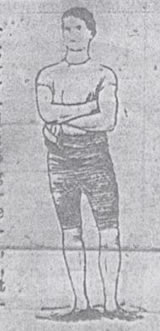
The order of exercises was varied and a wide field of skill and gifts exhibited. The crowd was interested at every stage and manifested its approval unmistakably. The athletes wore regulation costumes of orange and black.
The results and the events were as follows:
75-yard dash–T.B. Branch won in a time of 8 and three-fifths seconds.
Running long jump–F.B. Fogg won with a jump of 22 feet, 2 inches.
Throwing 16-pound shot–A. F. Powell won with a distance of 32 feet, 5 inches.
Standing high jump–F. B. Fogg won with a leap of 4 feet, 5 inches.
100-yard dash–E.C. Lathrop won with a time of 11 and three-fifths seconds.
Standing long jump–W. W. Cochran won with a jump of 9 feet, 7 and three-eighths inches.
150-yard dash–T.P. time of 18 and two-fifths seconds.
High pole leaping–Culver won the event with a bolt of 8 feet, 1 and one-half inches.
16-pound hammer throw–E. E. Price’s toss of 66 feet, 6 and one-half inches won the event.
Quarter mile run–W. Guild won in a time of 1 minute and 32 and three-fifth seconds.
Fogg was one of the best and most experienced performers in the meet. He was a Harvard graduate, but was enrolled in the Vanderbilt Law School. The Daily American reported, “Mr. F. B. Fogg gave an exhibition of high jumping. This gentleman is one of the best-known college bred athletes in the United States. His record which was made at Harvard will be of interest to his many friends in this city.”
The newspaper also reported “Gibson and Polk Taylor were rivals for the honor of throwing a base ball the longer distance. The latter won, throwing the ball 103 yards, a remarkably good record for an amateur.”
It was noted that John Hatfield of Brooklyn held the professional record with a toss of 133 yards, 1 foot and 9 inches in 1872. Other events that were cancelled this day were the running of the bases and running hop, step and jump.
Vanderbilt would conclude the long day with a baseball victory over Sewanee. The Commodores clubbed the mountain men, 10-2.
 |
|
The annual Field Day was held for many decades and became the premier spring event of the year. Gradually Vanderbilt would compete on this day with other colleges and universities within the state and region. This is where the Vanderbilt track teams were first formed and competed.
Basketball would not be invented until 1891 with the eastern game migrating to the Vanderbilt campus in 1893. The Commodores began playing football in 1890. Track, baseball, football, bicycling and tennis were the dominant sports in these early years.
The first track team would train at what is now Centennial Park. The park was part of the old fairgrounds and West Park, a horseracing track. In 1897 a horseshoe shaped quarter-mile track was constructed on campus what is known today as Wilson Lawn.
Vanderbilt’s yearbook, the Comet, appealed in its 1886 introduction, “give him a practice ground that will be somewhatly secluded at least, and with grateful heart he will repay the kindness in doing honest work and making a record to which the University can point with pride.”
Next week read about Kerby Ferrell, former Vanderbilt assistant baseball coach who had an eventful major league career as a player, coach and manager.
Traughber’s Tidbit: Vanderbilt track member R. K. Mason was a three-time champion in the Southern Intercollegiate Athletic Association, which the Commodores were a member frrom 1893-1922. Mason ran the Olympics preliminaries for the 100 and 400-yard dashes in 1908 and was offered a substitution spot on the team, but declined the invitation.
If you have any comments or suggestions you can contact Bill Traughber via e-mail at WLTraughber@aol.com.