

On-the-Job Training
by Graham HaysVanderbilt volleyball assistant coach Azhani Tealer led the first-year Indy Ignite to within a win of a Pro Volleyball Federation championship—and $1 million
NASHVILLE, Tenn. — From the moment he arrived in Nashville, Vanderbilt volleyball head coach Anders Nelson made clear that he wanted his program to hit the ground running when it took the court in 2025. It’s why he surrounded himself with people who have succeeded at the sport’s highest levels. They won conference championships, coached with national teams, mentored Olympians and even, like him, celebrated NCAA championships. He and his staff have done just about everything there is to do in the sport.
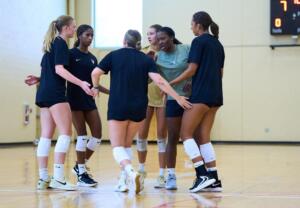
 Except what they’re doing now. Starting from scratch. Giving a young team reason to believe that a brand new program can compete against more experienced peers.
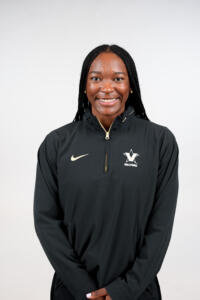
That particular experience is hard to come by. It has been more than 30 years since a first-year program took the court in the SEC. So, Vanderbilt got creative. By being flexible with assistant coach Azhani Tealer’s schedule, the Commodores not only allowed her to grow but gained first-hand experience of what it takes for a new team to shatter its ceilings.
When the young Commodores gather in a huddle before their first match in August, Tealer will know exactly what they’re feeling—and precisely what is possible. As a student-athlete, she was an All-SEC standout on a national champion at SEC blueblood Kentucky. But this past spring, while pulling double duty with Vanderbilt, she played for the Pro Volleyball Federation’s Indy Ignite. The first-year expansion team featured one of the youngest rosters in the league. They built a passionate following, grew together, upset the regular season champions in the playoffs and made it all the way to the championship match in Las Vegas.
And in the process, very nearly left Las Vegas with a $1 million bonus at least as impressive—and far more on the up and up—than anything in the Ocean’s franchise.
View this post on Instagram
Dare to Be First
Unlike women’s basketball, where the WNBA is approaching its 30th anniversary, and increasingly soccer, where the NWSL is in its second decade, volleyball has struggled to build a viable domestic professional league. Elite Americans, Vanderbilt assistant coach Lauren Plum among then, have long trekked around the globe for pro opportunities. Launched in 2022 ahead of its on-court debut in 2024, the Pro Volleyball Federation already has national television exposure and expansion plans ahead of the 2026 season.
After completing her standout collegiate career at Kentucky, Tealer was selected 19th overall by the Orlando Valkyries in the inaugural PVF draft. After her first season with Orlando, during which time Nelson convinced his former mentee to come on board as an assistant coach at Vanderbilt, she signed with Indy as a free agent. She knew she was choosing an organization that had a year less on-court experience than any other team in the league, but she liked the way then-head coach George Padjen described a philosophy of leaning into the energy of something new rather than treating it as a liability.
“I just felt like I was able to play and not worry about making errors or being too aggressive—that was his motto all season long,” Tealer said. “I was able to go out there and have a green light to be as aggressive as I wanted to be, and I really appreciated that. It’s not something that every coach lives by, so to play with that kind of freedom was nice.”
Based in the rapidly expanding Indianapolis suburb of Fishers, the Ignite were an immediate hit and challenged any other team save attendance juggernaut Omaha with crowds of around 4,000 per match. It didn’t hurt that Tealer, who earned First Team All-PVF honors, and her teammates were also an immediate success on the court. They raced out to a quick start and weathered injuries and a midseason lull to qualify for the playoffs.
About 20 miles up the road from where Caitlin Clark is writing her chapter in the cultural history of women’s sports, Tealer made herself at home while trying to put down the foundation on a league that will expand post-collegiate playing options beyond passport stamps and Olympic dreams.
“I’m hoping to get the most out it in the next however many years and make an impact that hopefully helps this thing last,” Tealer said. “In 2040, I’m hoping the girls who are coming to our games now are the ones on the court and able to say, ‘I was an Indy Ignite fan in 2025.’ I just want to wring out every experience and everything that I can out of it while it’s here because it’s a really cool thing.”
Playing for a Championship
The first time Indy and Omaha played in the regular season, it went about how you would expect between an expansion team full of rookies and the league’s defending champion. The Supernovas beat the Ignite in three sets. The second meeting was another sweep. But after stretching Omaha to five sets in their third regular season meeting, the Ignite traveled to Omaha for a nationally televised showdown in March. In front of nearly 13,000 people in the CHI Health Center, the Ignite swept the first-place defending champions in three sets.
The Ignite eventually made the playoffs as the fourth and final seed, eight games behind Omaha in the standings and as the only playoff entrant that finished under .500. But they had the memory of that March meeting, tangible evidence that anything is possible.
In Las Vegas, which hosted the semifinals and final, the Ignite upset the No. 1 seed. Playing with the freedom and fearlessness at the core of their identity, they won the final two sets against a team that had won eight of its previous nine postseason sets.
“After the second or third set, it didn’t really feel like anyone ever controlled the match,” Tealer recalled. “It was so tight point for point. We were scrapping and clawing—I didn’t really know what the score was for a lot of it. We were just trying to win. And for the last handful of points before the fifth set, I think they got tight and we didn’t. We stayed loose, which is not something that a young team normally does in those environments.”
When she played her final college match for Kentucky, Tealer wasn’t even sure there would be a next chapter for her on the court. Sitting with her Ignite teammates after the semifinal win, winded as much from their on-court celebrations as the five sets of high-level volleyball, they marveled at the familiar waves of adrenaline, accomplishment and joy—emotions they thought they left behind in college.
They didn’t get the storybook ending, instead falling to Orlando in four sets in the championship. It didn’t help that, beyond the nerves any athlete would feel with a trophy on the line, they were playing for a $1 million prize—only slightly less than the total team compensation for the entire season up to that point.
“I think when you’re playing for a trophy or bragging rights, losing hurts,” Tealer said. “But then when you are playing for a trophy, bragging rights, and a really big check, ouch, that one really hurts. It was fun to be a part of nonetheless.”
View this post on Instagram
Transferring Knowledge
From the opening serve in January through the final championship point on May 11, Tealer had a fan club in the form of the Commodores going through their first spring practices.
A group chat with student-athletes supplied her with not only encouragement but no end of updates and photos from Nashville. Nelson, Plum, Corbelli and the rest of the staff kept up their own correspondence with their remote-work colleague, whether she was chiming in during staff meetings on video calls or receiving photo updates on the newest member of the Corbelli family, soon-to-be 1-year-old Parker. She made the drive down Interstate 65 on a few occasions and was able to show off her workplace when Vanderbilt played Purdue in Fishers as part of a doubleheader with the Ignite (it was Tealer, rather than Nelson, who was in demand for the in-match broadcast interview).
 While distance and the need to focus on the task at hand with the Ignite posed their own challenges, she also gained a perspective impossible on the ground in Nashville. Just as it’s sometimes easier to discern a child’s growth after being away for a bit, Tealer saw growth in the young Commodores that is more easily missed when around them every day.
“In my college experience, after that first fall, my freshman spring was where I made the most growth because you’ve never trained that much ever,” Tealer said. “You’re training every day for hours and hours. And we had 10 people doing that. We have some great athletes, but to see them grow in volleyball IQ and making the right decisions and playing more cohesively—which is not easy to do when you haven’t played against anyone—it was so cool. Anders, Russell and Lauren have done such a great job.”
Nor was she merely advising Commodores. Tealer said a number of her young peers in the PVF approached her or reached out for advice on how to balance playing professionally with building a coaching foundation for their post-playing careers.
But more than anything, her season with the Ignite was a serendipitously perfect way to give Vanderbilt one more resource ahead of its first competitive fall. As the youngest member of the coaching staff, Tealer is still very much finding her way in a profession she never really planned on or considered until Nelson convinced her she was made for it. She’s still learning how to coach. But there is no one in NCAA Division I volleyball with more practical—or recent—experience in starting from scratch.
She and her Ignite teammates—some nearly a decade older than her and with children of their own—had to come together in a matter of months. They had to learn how to play together and how to coexist, living in the same team-provided temporary housing during the five-month season. They experienced growing pains and all the things, as Tealer put it, that you don’t know need to be fixed because you’ve never had to deal with them before.
After all of that, as a team one year removed from not having any players, they took the court in a semifinal against a team one year removed from winning a title. And they won.
That’s the thing. When everything is new, anything is possible.
“You’re creating new fans,” Tealer said. “A year ago, there were zero Indy Ignite fans, just like there were zero Vanderbilt fans before they restarted the program. And by the end of this year, so many people are going to know who both these teams are. I got to be a part of history with the Ignite, and these girls are going to be part of history at Vanderbilt. It’s going to really cool when they look back in 10 years and can say ‘I was part of that first team.’”
A lot of people can tell them that. In Tealer, Vanderbilt found—and encouraged—the person willing to show them what daring to be first looks like.