
Feb. 22, 2016
By Jerome Boettcher | Subscribe to Commodore Nation
The Bosnian War ended Jasmin Sehic’s dream of competing in the Olympics.But the four-year conflict took something more preciousâ€â€his best friend’s life.
“I was in the war for two years and lost my best friend next to me,” Jasmin said. “When thathappened to me, my life and my vision on life completely changed. We were hungry. We wererefugees. We slept on the ground.
“This showed the other side of life.”
Missing the chance to throw the javelin forBosnia in the 1992 Olympics in Barcelona nolonger mattered to Jasmin. For 20-year-oldJasmin, fighting in the Bosnian War, along withthe struggles as a refugee afterwards, openedhis eyes to the brevity of life and served as acatalyst to how he would raise his future family.
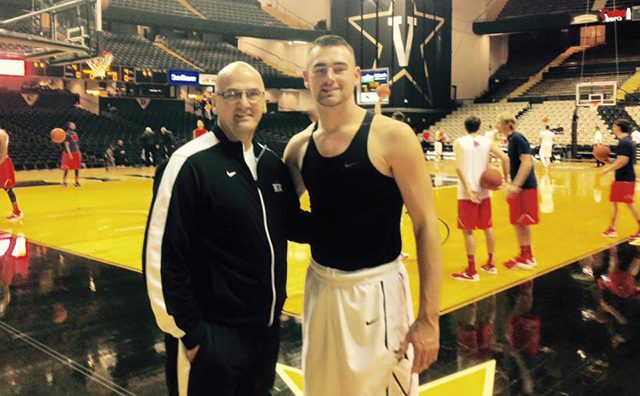
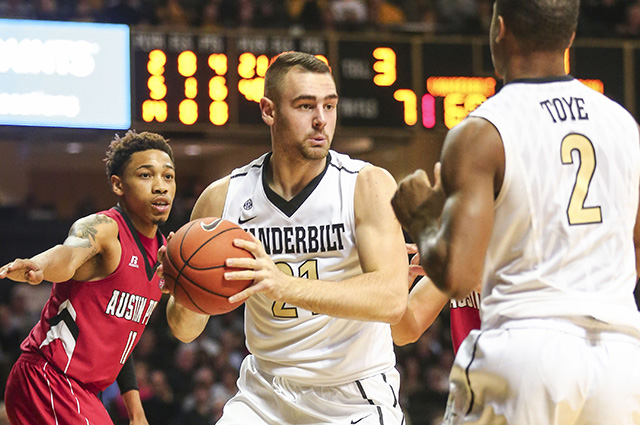
Sure, he wants to help his children fulfill theirdreams. And he is watching his oldest child,Samir, accomplish his as a freshman forward onthe Vanderbilt men’s basketball team. But, morethan anything, he and his wife, Amra, stressedto their children, Samir, 19, and Melissa, 11, totreat others with respect.
“What I try to teach my kids,” Jasmin says, “isbelieve in God, and trust in people and be careful.Because my message and how my wife andI try to raise our kids is God created us to loveeach other and support each other. It was very,very important we put that as a foundation forour family. When I lost my best friend in the war,that vision of what life actually is… it’s short.”
Months after the Bosnian War ended in 1995,Jasmin and Amra went to the U.S. Embassyin Zagreb, Croatia and applied for refugeestatus. After a three-month process, they wereapproved and the young couple left their homein Zavidovići, which is located 100 miles northof Sarajevo, the capital of Bosnia.
They were armed with education. Both werecollege graduates and teachers – Jasmin taughtphysical education at a high school and Amrawas an elementary school teacher. They wereleaving their home behind for uncharteredterritory. But they knew the rebuildingprocess in Bosnia after the split ofYugoslavia might take 10-15 years toreturn to normalcy.
“My wife and I decided to get out and chaseAmerican dream when we applied to cometo the United States,” Jasmin said. “I can tellyou, at this moment, me and my wife, with thekids we have and the lives we have, we live theAmerican dream.”
They arrived at Atlanta International Airport,ironically just miles from the site of the 1996Summer Olympics. They had just two suitcases,$20 in their pockets, without a car, a job, a placeto live and only speaking 10 words in English.Plus, Amra was six months pregnant with Samir.
“We don’t have nothing but two suitcases,pregnant woman and lots of enthusiasm andhungriness for life,” Jasmin recalls.
The family moved to Denton, Texas, just outsideof Dallas right before Samir started kindergarten.An active child, he played a multitude ofinstrumentsâ€â€the violin, viola, bassoonâ€â€andtried karate and gymnastics. He even dabbledin the field events of shot put and discus on thetrack team in middle school.
In second grade, he started playing basketball.Three years later, in the fifth grade, as hetraveled around the country with the AAU giantTexas Titans from Dallas (who he would win fourstraight national championships with) he had asudden realization. He wanted to play basketballfor the rest of his life, as long as he could,through high school, college and at the highestlevel with dreams of the NBA.
“It is crazy to tell people that,” he said. “Ihave always been a big guy. Always been a bigbody. (Basketball) just fascinated me. I loved theathleticism, the skill level. Everything I felt a lotof sports (offered) combined into one. I was justa little kid who fell in love with the game.”
Jasmin and Amra quickly jumped on board tohelp their son in every way they could.
They were staples at his games and continuesto be. He now does business and trainingat least once a month in Nashville, which hasallowed him to see several games already at Memorial Gym.
He was his most vocal supporterat games, encouraged him not to worry aboutdistance when looking at possible colleges andhe even started a Facebook page for Samir,called “Big Boz,” after his nickname.
But even as Samir moved up the ladder andreceived more attention from college coaches,Jasmin and Amra were quick to remind him thatbasketball was a privilege.
“Priority No. 1 was academics, always,”Jasmin said. “We made a dealâ€â€you bring home100s (on tests and papers), we are going tobring you support on the basketball side.”
Samir made to hold up his end of the bargain,earning academic all-state honors twice whileat Cy Woods High School.
Though raised in America, Samir proudlytalks about his Bosnian heritage and understandsthe sacrifice his parents made in leavingtheir native country for a new life in the states.The 6-foot-9, 247-pounder goes by the nicknameof Big Boz, holds dual citizenship andspeaks fluent Bosnian.
“You got to take pride of who you are,” Samirsaid. “My nickname kind of represents it. Peoplealways joke around about it and my dad alwaysjokes about it. But just something like that itsomething I take a great pride in.”
He says it’s not uncommon in the Sehichousehold to hear a conversation start in Englishthen 10 words rattled off in Bosnian beforequickly switching back to English. He has visitedhis grandparents and extended family back inBosnia four or five times, last doing so before hisfreshman year of high school.
Each of the last four years he has been invitedto try out with the Bosnian National Team. Dueto a heavy load of AAU basketball and enrollingearly at Vanderbilt last summer, he has notbeen able to attend. He is hopeful he’ll receivean invite again this summer and get a chance toplay with the U-20 Bosnian national team.
And, though he admits it’s not at the forefrontof his mind as he currently tries to makeimpact for the Commodores, he would love torepresent Bosnia in the Olympicsâ€â€maybe assoon as the 2020 Summer Games in Tokyo.
“That is the highest level of basketball thatyou can play in across the whole world,” Samirsaid. “I would be able to represent myself, thecountry and even give something back to mydad. That wasn’t something he was able to do. Iknow that would be a big dream of mine and, ofcourse, would also be a big dream of his.”
Not only was Jasmin close to achieving hisdream, but he had in fact actually already qualifiedfor the 1992 Barcelona Olympics. When hetalks about it more than two decades, there isno sense of regret in his voice.
Instead, he feels blessed to be living in theUnited States with a roof over his head and foodon the table. And he couldn’t be happier to seehis son shooting for his dreams.
“I feel like he had a lot of motivation to helpme achieve my goal,” Samir said. “Not to tryto achieve his goal through me. That’s not thecase. But to definitely help me achieve mine. Ifit wasn’t for him I wouldn’t have accomplishedhalf of what I have right now. Just because ofthe drive he taught me early on, the motivationhe gave me. He taught me early on you have towork to achieve things. (My parents) were thedriving force behind the train.”